
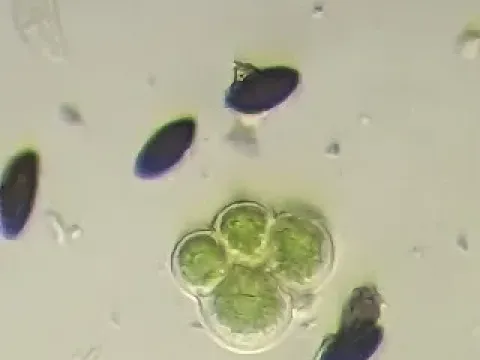
Trebouxia
Trebouxia
Trebouxia is a genus of green algae belonging to the class Trebouxiophyceae. While not a conventional agricultural crop, it is the most widespread photobiont in lichen symbioses, playing a critical role in the primary productivity of various ecosystems, particularly in extreme environments where higher plants cannot survive.
What the section contains

Trebouxia
The morphology of Trebouxia cells is distinct, typically featuring a single, large, star-shaped chloroplast with a central pyrenoid. This structure is highly efficient at capturing light, enabling photosynthesis in low-light conditions often encountered within the complex architecture of a lichen thallus.
In terms of growth requirements, Trebouxia thrives in habitats with high humidity and moderate solar radiation. Unlike terrestrial crops, it absorbs nutrients directly from the environment, often relying on the protective shield provided by its fungal partner to regulate ion exchange and prevent desiccation.
The climatic range of Trebouxia is vast, extending from arctic tundras to temperate forests and arid rocky landscapes. Its ability to undergo metabolic dormancy during periods of extreme environmental stress, such as freezing temperatures or lack of liquid water, is a key physiological advantage of this genus.
Current industrial research focuses on the cultivation of Trebouxia in controlled photobioreactors. By optimizing the supply of nitrogen, phosphorus, and specific wavelengths of light, researchers aim to produce high-density biomass for potential pharmacological applications and the extraction of specialized lipids.