
Trebouxia arboricola
Trebouxia arboricola
Description
Growing requirements
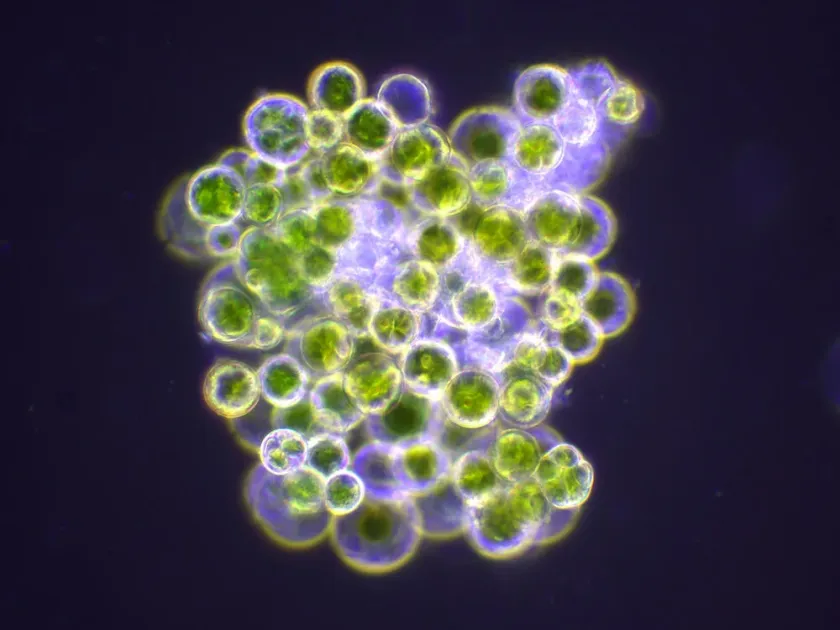
Trebouxia arboricola is a species of green algae that belongs to the Trebouxiaceae family. It is predominantly known as a phycobiont, providing the photosynthetic surface area for various lichen species found on tree bark and rocks worldwide.
The cells of this algae are typically spherical, containing a large central chloroplast with a prominent pyrenoid. This structure is highly efficient at capturing light energy, allowing the organism to thrive in diverse, often challenging, terrestrial environments.
For controlled cultivation, Trebouxia arboricola requires a steady supply of essential nutrients provided in specialized algal media. The culture should be kept in a climate-controlled room with temperatures strictly maintained between 18 and 22 degrees Celsius.
Light intensity is a critical parameter; while these algae are photosynthetic, they are adapted to low-to-moderate light conditions. Direct, high-intensity sunlight can damage their photochemical apparatus and reduce overall biomass production efficiency.
Aeration with CO2-enriched air helps to maximize growth rates. Regular monitoring of the pH level, ideally between 6.5 and 7.2, ensures that the nutrients remain bioavailable and that the cells remain in the active growth phase.
Main diseases and pests
Contamination by invasive microorganisms represents the greatest threat in mass cultivation settings. Fast-growing bacteria and other algal species can easily outcompete Trebouxia for nutrients, leading to a complete loss of the primary culture.
Protozoan grazers are another major risk factor. In large bioreactors, amoebae and flagellates can consume significant amounts of biomass, necessitating the use of specialized filtration or sterilization methods for the growth medium.
Accumulation of toxic metabolic byproducts is common in batch-culture systems. If the medium is not refreshed periodically, the build-up of waste can inhibit cellular division and eventually cause the death of the culture.
Exposure to ultraviolet (UV) radiation beyond natural levels can lead to oxidative stress and DNA damage. While these algae are adapted to outdoor conditions, laboratory-grown cells lack the protective secondary metabolites produced in lichenized states.
Nutrient deficiency, particularly regarding nitrogen sources, causes the cells to enter a resting state or form thick-walled akinetes, which significantly slows down the production cycle and reduces harvest yield.