
Prionium
Prionium
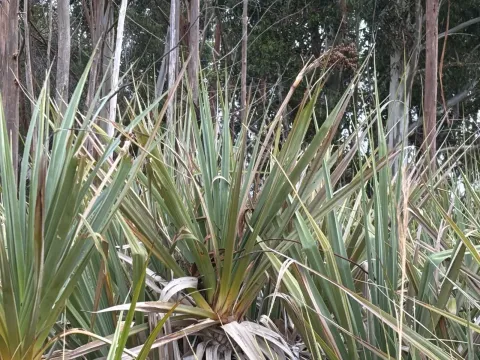
Prionium, specifically the species Prionium serratum, is a perennial plant that stands alone in its genus, belonging to the Juncaceae family. Often referred to as the palm-like rush, it is a striking example of botanical adaptation to wetland environments.
What the section contains

Prionium
The primary requirement for this crop is a consistent water supply. It is native to South Africa, where it thrives along riverbanks, in marshes, and on wetlands, making it an excellent plant for soil stabilization in saturated zones.
Prionium requires high light levels to sustain its growth. The plant utilizes full sun to harden its leaves, which are rich in structural fibers. It is intolerant of prolonged drought and requires a stable water table to thrive in a cultivated or natural setting.
The soil preference for Prionium is typically acidic and organic-rich. It is commonly found in peat-based soils that provide both the necessary nutrients and the water retention required to maintain the plant's health throughout the growing season.
Cultivation of Prionium is restricted by its niche environmental needs. It is rarely grown as a standard commercial crop but remains vital in regional agriculture for its role as a source of raw materials for traditional crafts and land management.
The primary economic output from Prionium is its high-quality leaf fiber. Due to its remarkable tensile strength and resistance to water degradation, the leaves are harvested for the production of baskets, mats, and various durable woven items.
Harvesting is traditionally done by hand, focusing on mature leaves. Sustainable practice involves selective cutting to ensure the core of the plant remains intact, allowing for multiple harvests over several years from the same established clump.
The yield of fiber is determined by the environmental conditions and the age of the plant. A well-managed stand in a riverine setting can produce a steady supply of fiber, provided that the water quality remains high and pollutants are minimized.
Beyond fiber, the plant provides ecosystem services, including water filtration and habitat protection. These factors add value to Prionium stands, although they are harder to quantify in traditional agricultural yield metrics.
In terms of harvesting efficiency, Prionium offers long, linear fibers that require minimal processing compared to other bast fibers. Once harvested, the leaves are typically sun-dried, which hardens the tissue and prepares the fibers for weaving.