
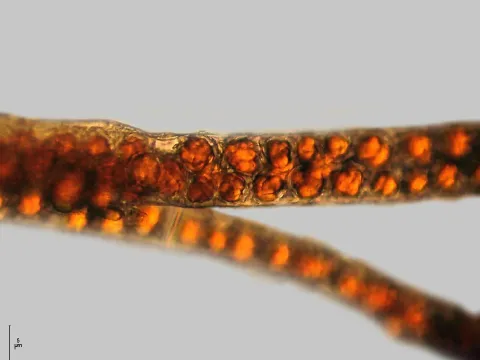
Sphaeroplea
Sphaeroplea
Sphaeroplea is a genus of filamentous green algae belonging to the family Sphaeropleaceae. While not a commercial agricultural crop, it is of significant interest to hydrobiologists studying freshwater biodiversity and water quality indicators.
What the section contains

Sphaeroplea
These algae typically inhabit ephemeral ponds, puddles, and temporary ditches that frequently dry out. They thrive in environments where environmental factors are transient, relying on specific adaptation strategies to survive in varying water levels.
The morphology consists of simple, unbranched filaments composed of cylindrical cells. A distinct botanical feature is the presence of multiple belt-shaped chloroplasts within the cells, which facilitates efficient photosynthesis under low to moderate light conditions.
Environmental requirements include clear, unpolluted water with a balanced nutrient content. Sphaeroplea is sensitive to eutrophication, meaning it rarely persists in areas affected by heavy agricultural runoff or chemical contamination.
Regarding management, they are generally left undisturbed in natural ecosystems. In irrigation systems, they are considered negligible unless excessive growth occurs, which may signal a need for improved water quality monitoring or maintenance.
The primary threat to Sphaeroplea is the excessive input of nitrogen and phosphorus from synthetic fertilizers, which leads to the rapid proliferation of competing algal species.
Agricultural pesticides represent a critical danger, as the physiological structure of these filamentous algae is highly vulnerable to common chemical biocides used in field crop protection.
Habitat loss, particularly through the reclamation of seasonal wetlands and the drainage of temporary basins, significantly reduces the distribution range of this genus.
Changes in water turbidity caused by increased siltation or erosion negatively impact the photosynthetic potential, preventing the maturation of reproductive structures.
Invasive aquatic species or rapid succession by hardier algal blooms often suppress Sphaeroplea, leading to the collapse of local population clusters within the ecosystem.