
Ural false spiraea
Sorbaria sorbifolia (L.) A. Braun
Description
Growing requirements
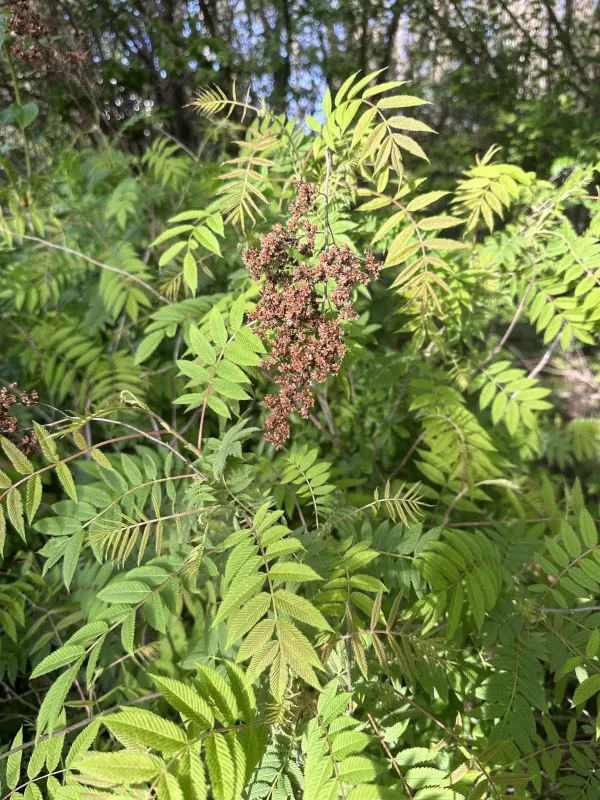
Ural false spiraea (Sorbaria sorbifolia) is a robust deciduous shrub belonging to the Rosaceae family. Native to Siberia, the Far East, Japan, and Korea, it thrives naturally along forest edges and riverbanks.
The plant is highly valued for its extreme winter hardiness and versatility. It adapts well to various soil types, ranging from moist loams to slightly acidic or alkaline substrates, provided they are well-drained.
While this shrub performs best in full sunlight, it tolerates partial shade with relative ease. Its ability to thrive in polluted urban environments makes it a popular choice for city parks and infrastructure landscaping.
Propagation is primarily achieved through root suckers, cuttings, or division. Due to its aggressive spreading habit, it is an excellent candidate for erosion control on slopes and for creating dense, maintenance-free hedges.
Economically, the shrub serves as a decorative asset and a valuable honey source. Its architectural foliage and plumes of creamy white flowers contribute significantly to the aesthetic value of public and private landscapes.
Main diseases and pests
The most frequent insect pests encountered on this plant include aphids and spider mites, particularly during hot and dry summer spells. Regular inspection of the undersides of the leaves is advised to prevent significant damage.
Powdery mildew represents the primary fungal threat, appearing as a white powdery coating on foliage under conditions of high humidity and poor airflow. Fungicidal treatments are effective when applied at the first signs of infection.
Routine pruning of old or diseased stems is a critical cultural practice. This promotes better air circulation through the center of the shrub, significantly reducing the likelihood of humidity-related pathogens.
Managing soil moisture is essential; while the plant is thirsty, poor drainage on heavy clay soils may lead to root rot. Ensuring adequate soil structure before planting prevents long-term physiological stress.
Integrated pest management strategies, combined with proper spacing and nutrient maintenance, are sufficient to keep the plant healthy and vigorous throughout its growing season.