
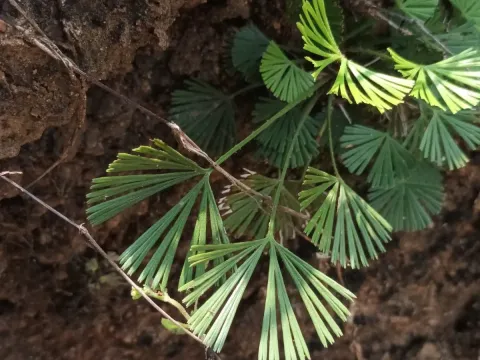
Actiniopteris
Actiniopteris
Actiniopteris is a genus of ferns within the Pteridaceae family, known for its distinct fan-shaped fronds that resemble miniature palm trees. Native to arid and semi-arid regions of Africa and Asia, these plants have evolved to survive in rocky habitats.
What the section contains


Actiniopteris
Botanically, the plant is characterized by its compact habit and dichotomously branched fronds. Unlike many other ferns, it is relatively drought-tolerant, making it a unique candidate for collections where humidity cannot be kept at high levels constantly.
Successful cultivation requires a well-draining soil mixture. A blend containing peat, perlite, and coarse sand or charcoal is recommended to ensure that excess water drains away quickly from the root system, preventing compaction.
The climate requirements for Actiniopteris involve bright, filtered light. Exposure to intense, direct midday sun should be avoided as it can scorch the delicate segments of the fronds, leading to a loss of the plant's characteristic vibrant green color.
Temperature management is critical for the health of this fern. It prefers stable warmth ranging from 20 to 25 degrees Celsius. Cold drafts or sudden drops in temperature can cause stress, leading to frond drop and growth stagnation.
Fungal pathogens associated with overwatering pose a primary threat to Actiniopteris. Root rot, caused by excessive moisture and poor aeration, is the most common cause of mortality in indoor fern cultivation.
Spider mites are prevalent pests that thrive in low-humidity environments. They cause stippling and webbing on the undersides of the fronds, which can eventually lead to leaf chlorosis and death if not treated.
Scale insects present another significant challenge, appearing as small brown bumps on the fronds. These pests feed on sap and can significantly weaken the plant if their population is allowed to grow unchecked.
Leaf nematodes may also infect the plant through contaminated water or soil. Signs of infestation include irregular brown necrotic spots on the leaves, which expand rapidly as the nematode population increases.
Maintaining a clean growing area and utilizing sterile potting media are essential preventative measures against these threats. If infestations occur, systemic pesticides labeled for indoor use should be applied carefully.