
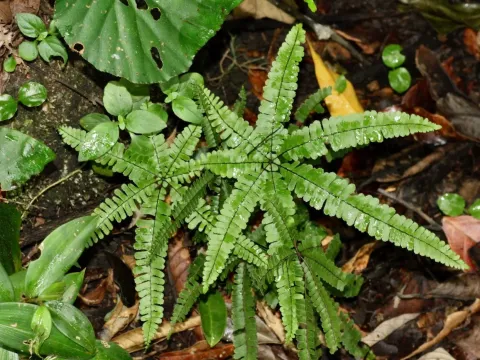
Adiantopsis
Adiantopsis
Adiantopsis is a genus of ferns belonging to the Pteridaceae family. These plants are native to the tropical and subtropical regions of the Americas, where they typically thrive in shaded and humid forest environments.
What the section contains
Adiantopsis
The plants are characterized by their delicate, dark-green, and glossy fronds. They generally exhibit a rhizomatous growth habit, with short or creeping stems covered in scales, making them highly valued for ornamental gardening.
Regarding cultivation requirements, Adiantopsis prefers bright, indirect light. Direct sunlight can scorch the fronds, whereas too little light will lead to thin, elongated growth and a loss of the plant's natural deep coloration.
Humidity is the most critical factor for success. The plant requires a humid atmosphere, ideally maintained above 60%. Regular misting, the use of pebble trays, or mechanical humidifiers are recommended for indoor setups.
The soil substrate must be porous and well-draining to prevent waterlogging. A mixture of peat moss, perlite, and pine bark is often recommended to simulate the natural, airy forest floor environment in which these ferns evolve.
The most significant threat to Adiantopsis health is overwatering, which predisposes the root system to fungal pathogens such as Pythium and Phytophthora, eventually causing crown rot.
Scale insects are common pests for this genus. They appear as small brown or tan bumps on the undersides of leaves and along the petioles, requiring careful manual removal or systemic insecticides.
Spider mites are another major concern, especially in dry, warm indoor environments. These pests cause the fronds to lose their luster, turn pale, and eventually develop webbing between the pinnae.
Mealybugs can cluster in the tight spaces of the rhizome and the base of the fronds. Their presence is marked by white, cotton-like masses, which can stunt the growth of new, tender fronds.
Good cultural hygiene, such as promptly removing dead or yellowing foliage and avoiding wetting the leaves excessively during the evening, significantly reduces the likelihood of severe pest infestations.