
Whisk fern
Psilotum nudum
Description
Growing requirements
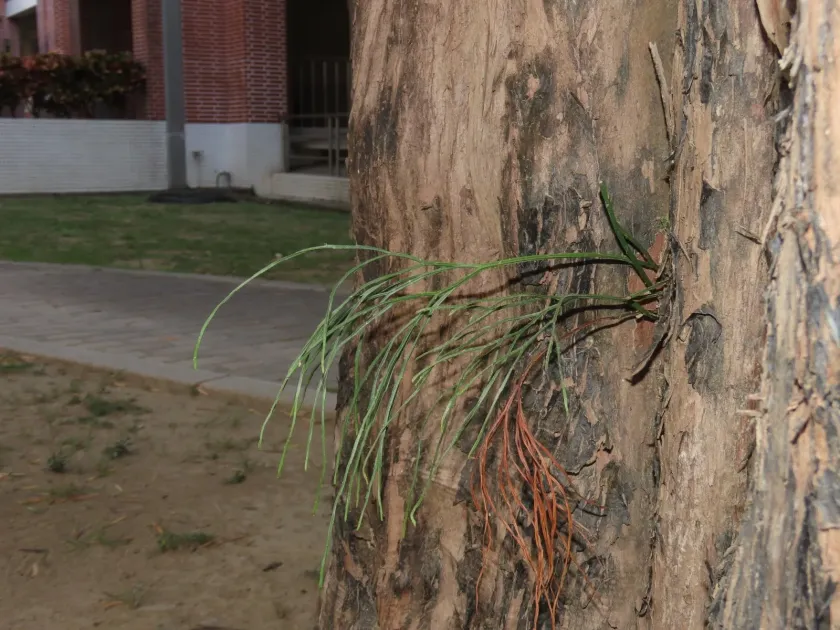
The whisk fern (Psilotum nudum) is a fascinating primitive vascular plant belonging to the Psilotaceae family. It lacks true leaves and roots, instead utilizing green, photosynthetic dichotomous stems and hair-like rhizoids for nutrient absorption.
This species is widely distributed across tropical and subtropical regions worldwide. In its natural environment, it acts as an epiphyte, colonizing crevices, rocky ledges, or the trunks of trees, which dictates its preference for well-draining, loose growing media.
For cultivation, provide a substrate composed of bark, perlite, and sphagnum moss. This mimics the epiphytic habitat and ensures sufficient air circulation for the delicate rhizoid system, preventing compaction of the growing medium.
The plant requires high humidity levels to thrive. In indoor settings, regular misting or placement on a humidity tray is essential to replicate the humid atmosphere of its native rainforest and scrubland habitats.
Light requirements are moderate, focusing on bright but indirect light. Direct sunlight is harmful and will scorch the stems, while inadequate light will cause the plant to become leggy and lose its characteristic branching structure.
Main diseases and pests
Overwatering remains the primary threat to the whisk fern. Excess moisture in the soil prevents oxygen from reaching the rhizoids, leading to root rot and rapid decline of the specimen. Use well-draining pots to mitigate this risk.
Scale insects are common pests that colonize the stems of Psilotum nudum. These pests feed on plant fluids and can be difficult to remove; manual removal combined with specialized horticultural oils is often the recommended treatment.
Spider mites represent another common threat, especially in environments where humidity is not strictly maintained. They manifest as fine webbing and pale spots on the stems, which can eventually lead to the necrosis of the tissue.
Fungal pathogens may attack the plant if air circulation is poor and humidity levels are too high. Good ventilation is key to maintaining a healthy environment and preventing outbreaks of mold or fungal spots on the stems.
Lastly, sensitivity to chemical fertilizers can be an issue. Use only diluted, organic-based fertilizers specifically for ferns or epiphytes, and avoid over-fertilizing, as the plant has evolved to survive in nutrient-poor environments.