
Azure pickerelweed
Pontederia azurea
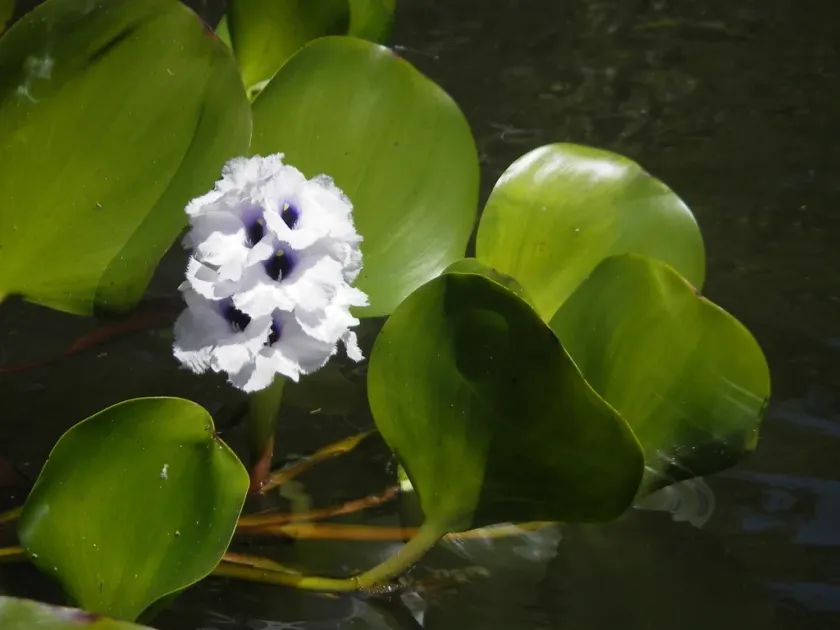
Description
Growing requirements
Pontederia azurea, commonly known as Azure pickerelweed, is a perennial aquatic plant belonging to the Pontederiaceae family. Native to the tropical regions of Central and South America, it thrives in warm, slow-moving or stagnant waters, including marshes and river edges.
Botanically, the plant is characterized by its elongated, submerged or floating stems and distinctive heart-shaped leaves. It is highly valued in horticulture for its stunning blue flowers and its ability to act as a natural filter in aquatic ecosystems.
The plant has specific environmental requirements, primarily needing a tropical or subtropical climate. The water temperature should ideally range between 20 and 25 degrees Celsius. In cooler climates, it must be grown as a seasonal annual or brought indoors during winter months.
Regarding soil and planting, the species requires a nutrient-rich substrate, typically a mixture of heavy clay and organic silt. The plant should be anchored in containers placed at a depth of 20 to 50 centimeters, allowing the foliage to reach the water surface effectively.
Agrotechnical maintenance includes placing the plant in a position with full to partial sun exposure. High light intensity is crucial for the plant's structural integrity and its prolific blooming cycle throughout the growing season.
Main diseases and pests
The primary threat to Pontederia azurea is frost, as the plant lacks cold hardiness. Exposure to freezing temperatures will cause the death of the foliage and potentially the entire root system if not protected in time.
Pests such as aphids are frequently encountered during the peak summer months. These insects target the lush above-water leaves, necessitating manual removal or the use of aquatic-safe biological treatments.
Disease development is often linked to poor water quality or stagnation, which can lead to fungal infections affecting the stems and crown of the plant. Maintaining consistent water circulation and oxygenation is vital for plant health.
Over-fertilization can result in algal blooms, which compete with the Azure pickerelweed for light and nutrients. Therefore, it is important to provide balanced, controlled-release fertilizers specifically designed for aquatic use.
Regular maintenance involves pruning dead or decaying plant material. This practice prevents excessive organic matter accumulation, thereby minimizing the risk of bacterial growth and supporting a clean aquatic environment.