

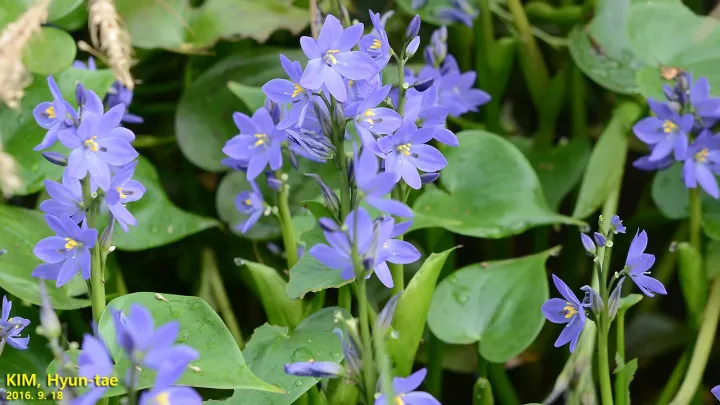
Description
Sowing dates
Pontederia korsakowii is an annual aquatic plant belonging to the Pontederiaceae family. In its natural habitat, seeds germinate in the spring when water temperatures reach the optimal levels necessary for embryonic activation.
For commercial cultivation, seeds are sown into a nutrient-rich substrate, preferably organic-heavy silt, directly within shallow water bodies or controlled irrigation ponds. It is essential to maintain stable temperature conditions during the germination period.
Sowing should be performed after the risk of late frost has passed, as seedlings lack high cold tolerance. Typically, this aligns with late May or early June in its native regions of the Far East.
Sowing density must account for the active expansion of the root system and the formation of leaf rosettes. Excessive overcrowding can lead to a deficiency in sunlight, which is critical for the development of vegetative mass.
The depth of seed placement should be minimal, as seeds of this species require light exposure to successfully germinate, a trait characteristic of many wetland plant species.
Growing requirements
This crop has specific requirements for water management, preferring stagnant or slow-flowing shallow waters. Water levels should be kept between 10 to 30 centimeters to ensure correct stem and leaf development.
The soil substrate should consist of silty or peaty bottom sediments rich in available nutrients. In poor sandy soils, the development of Pontederia korsakowii is significantly delayed, reducing total biomass.
The plant requires high light intensity throughout the entire growing season. Under shading from other aquatic flora or due to water turbidity, photosynthetic productivity drops, negatively affecting the plant's life cycle.
The temperature range for vegetation is 20–28 degrees Celsius. Extreme heat accompanied by water drying leads to rapid plant death, making the maintenance of a constant water level a critical success factor.
The chemical composition of the water should be near-neutral or slightly acidic. Excessive mineralization or alkaline environments negatively affect the uptake of micronutrients by the root system.
Yield
The economic utility of Pontederia korsakowii is primarily linked to its high nutritional value as a forage crop. In its native regions, it is frequently utilized as a component of green fodder.
The biomass of the plant is noted for its high protein and sugar content, making it a promising candidate for use in aquaculture. Proper agronomic care allows for a stable harvest of vegetative mass by the end of the summer.
Yield estimation is conducted based on the dry matter of the vegetative part, as the plant maintains a high water content. Productivity depends heavily on the fertility of the bottom sediments and the quality of the water medium.
In natural ecosystems, this plant plays a significant role in forming the biomass of the coastal zone. Under agricultural conditions, yield can be significantly increased by applying localized fertilizers to the bottom layer.
Harvesting is performed manually or mechanically, depending on the depth of the water body. It is important to maintain a balance between harvesting and preserving enough plants to ensure natural population replenishment.
Main diseases and pests
The primary threats are insect phytophages that feed on the succulent leaves and petioles of the plant. Damage to vegetative organs reduces the plant's overall resistance to various pathogens.
Among diseases, fungal infections are common, thriving in conditions of stagnant water and poor air circulation. Leaf spot diseases can spread rapidly during periods of high humidity.
Pests, such as certain species of fly and leaf beetle larvae, can cause significant damage by boring into stems. This leads to a loss of turgor pressure and premature death of individual shoots.
Contamination of water bodies by pesticides and herbicides from nearby agricultural fields is a critical factor that can destroy an entire plantation in a short period.
Invasive algae species may compete with Pontederia for nutrients, suppressing its growth in the early stages. Regular cleaning of the water body to remove unwanted vegetation is essential to protect the crop.
Harvesting
Harvesting of Pontederia korsakowii begins during the peak flowering phase, when nutrient accumulation in the aerial part reaches its maximum. At this stage, the plant has the optimal chemical composition for forage purposes.
The harvesting technology involves mowing the vegetative mass followed by immediate extraction from the water. It is crucial not to leave harvested parts in the water to prevent decay.
After collection, the plant material must be dried quickly or processed into silage. The high moisture content of the raw material requires strict adherence to storage conditions to prevent spoilage.
If seed collection is required for the next season, harvesting is conducted in stages. A portion of the plants is left until the seed pods are fully mature to ensure natural reseeding in the area.
Seed storage requires conditions close to natural: in containers with a moist substrate at low positive temperatures to prevent dehydration and loss of germination viability.
Content graph
Connections · Pontederia korsakowii
Most often together:
Marketplace