
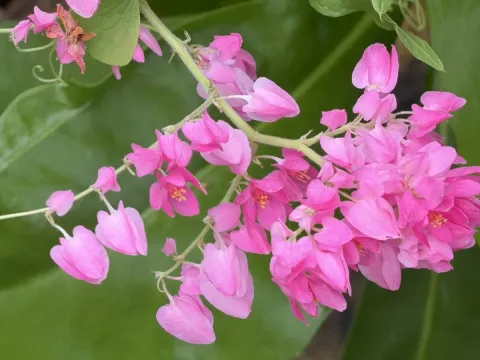
Antigonon
Antigonon Endl.
Antigonon (Antigonon Endl.) is a genus of perennial climbing vines belonging to the Polygonaceae family. Originating from the tropical regions of Mexico and Central America, this genus is widely recognized for its high ornamental value and vigorous growth habit.
What the section contains

Antigonon
The plant thrives in warm, tropical climates and requires full sunlight to achieve its maximum flowering potential. It is highly sensitive to cold, making it unsuitable for outdoor cultivation in temperate regions where frost is a recurring phenomenon during the winter months.
Regarding soil, Antigonon is relatively adaptable, performing best in well-drained, fertile soils with a neutral pH. While it is tolerant of temporary drought conditions, consistent moisture during the growing season significantly enhances its vegetative development.
Agricultural management requires the installation of sturdy supports, such as trellises or fences, as the plant uses its tendrils to climb. Maintenance includes regular pruning, which prevents the vine from becoming invasive and encourages denser foliage and more prolific flowering.
The plant is known for its distinct heart-shaped leaves and long, trailing racemes of pink, coral, or white flowers. These flowers are not only beautiful but also serve as a critical ecological component in its native habitat by supporting various pollinators.
Antigonon is highly valued in apiculture as a prolific honey plant. The flowers produce a continuous supply of nectar, making them a preferred source for honeybees, which can substantially increase local honey production and promote the pollination of surrounding crops.
Beyond its use as a honey source, the plant produces numerous seeds that provide forage for various avian species. In agricultural settings, it is often utilized to provide natural ground cover or as a living screen for vertical structures.
The primary pests affecting Antigonon are sucking insects, such as aphids, mealybugs, and spider mites. These pests thrive in dry conditions and can cause stunted growth if infestations are not managed early with appropriate horticultural oils or insecticides.
Pathological threats are primarily limited to root rot and fungal infections, typically triggered by poor drainage or excessive soil saturation. Maintaining a proper watering regimen and ensuring adequate air circulation around the canopy are the most effective preventive measures.