
Aeluropus littoralis
Aeluropus littoralis
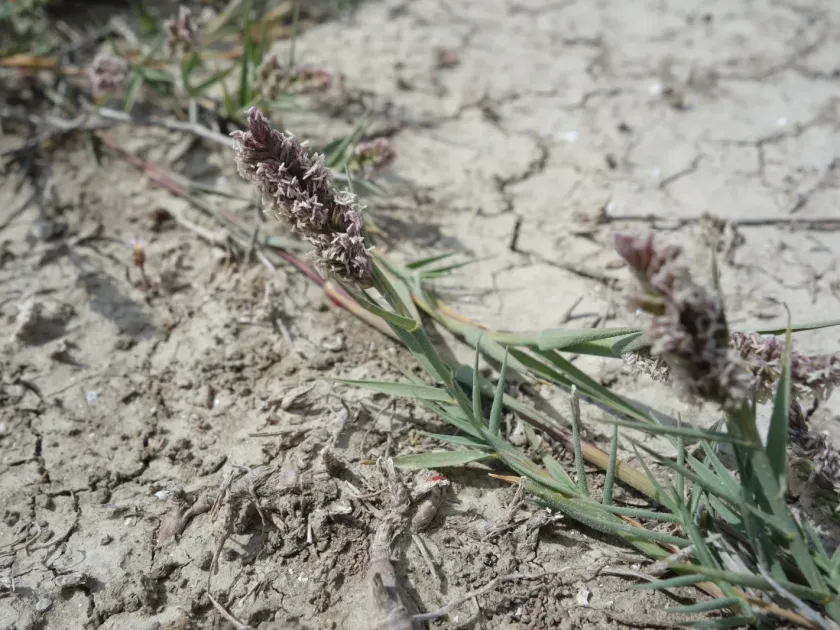
Description
Growing requirements
Aeluropus littoralis is a perennial grass species belonging to the Poaceae family. Known commonly for its resilience, it is widely recognized as a halophyte, perfectly adapted to saline habitats.
The plant originates from coastal regions and inland salt flats. It thrives in soils where high salinity levels restrict the growth of conventional agricultural crops, making it a critical species for soil stabilization.
Botanically, it features narrow, stiff leaves and panicle inflorescences. Its extensive rhizomatous root system allows it to form dense mats, effectively preventing wind and water erosion in sensitive ecosystems.
The grass prefers full sunlight and well-drained soils, though it shows remarkable tolerance to waterlogging. It is highly valued for its ability to survive in fluctuating environmental conditions.
In terms of agricultural management, this grass requires minimal input. It is best suited for restoration projects of degraded saline lands where environmental stress is high and traditional vegetation fails.
Yield
While not a high-yielding forage crop by standard measurements, Aeluropus littoralis provides essential biomass in regions where feed availability is strictly limited by soil salinity.
The biomass production is seasonal and significantly influenced by moisture availability. It offers a reliable source of green matter for livestock during critical dry periods in arid climates.
It possesses excellent regenerative capacity, allowing it to recover quickly after grazing or mowing, which ensures long-term sustainability of the pasture lands it inhabits.
The nutritional composition of this grass is sufficient for small ruminants, and its mineral content makes it a useful supplement in restricted feeding programs on salt-affected farms.
Yield management focuses on preventing overgrazing, ensuring that the plant retains enough vegetative growth to maintain its photosynthetic capacity and root density throughout the year.
Main diseases and pests
Aeluropus littoralis exhibits strong natural resistance to common cereal diseases. Its unique physiological adaptation to salt acts as a deterrent to many pathogens that typically infect grasses.
Insect pests are generally not a major concern for this species. Its tough texture and chemical composition in saline environments make it an unattractive host for most common agricultural pests.
The main threat to the species is ecosystem imbalance caused by excessive grazing or drastic changes in soil salinity levels due to over-irrigation or drainage management.
Invasive species can occasionally outcompete Aeluropus littoralis if the salt concentration drops significantly, shifting the habitat balance toward less salt-tolerant vegetation.
Overall, protective measures involve monitoring the intensity of use to preserve the integrity of the soil cover and prevent the intrusion of unwanted opportunistic weed species.