
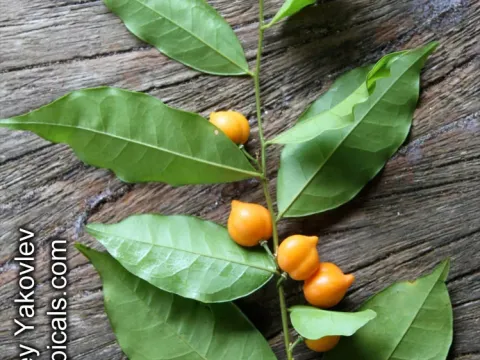
Microdesmis
Microdesmis
Microdesmis is a genus of tropical shrubs and small trees belonging to the family Pandaceae. Originating primarily from the tropical rainforests of equatorial Africa, these plants are known for their dense foliage and resilience in native woodland understory conditions.
What the section contains

Microdesmis
Regarding climate, Microdesmis requires a humid tropical environment with minimal temperature fluctuations. It thrives in regions where the annual rainfall is substantial and the relative humidity remains consistently high throughout the year.
The soil requirements are strict: the plant needs deep, well-draining, and nutrient-rich soils. Waterlogging is detrimental to the root system, so selecting land with good natural drainage or installing infrastructure to manage excess moisture is essential.
Cultivation practices involve regular monitoring of soil acidity, as these plants generally prefer slightly acidic to neutral pH ranges. Proper spacing is required to ensure sufficient air circulation around the canopy, which helps in preventing foliage diseases.
Economic utility of Microdesmis is diverse, including its use as timber for local agricultural tools and as a source of medicinal compounds derived from its bark and leaves in traditional botanical practices.
Fungal infections represent the primary threat to Microdesmis plantations, especially in environments where air circulation is restricted and humidity is excessive.
Scale insects and mealybugs are the most common pests, often clustering on young stems and leaves, which can stunt the overall growth of the plant.
Root pathogens can develop if the soil structure becomes too compact, leading to stagnant water and anaerobic conditions that kill delicate roots.
Management strategies involve rigorous sanitation practices, including the removal of dead plant tissue and the use of targeted biological controls to manage insect populations.
Monitoring for foliage discoloration or wilting is critical, as these are often the earliest signs of environmental stress or pathogen infestation in the growing cycle.