
Quiina guianensis
Quiina guianensis
Description
Growing requirements
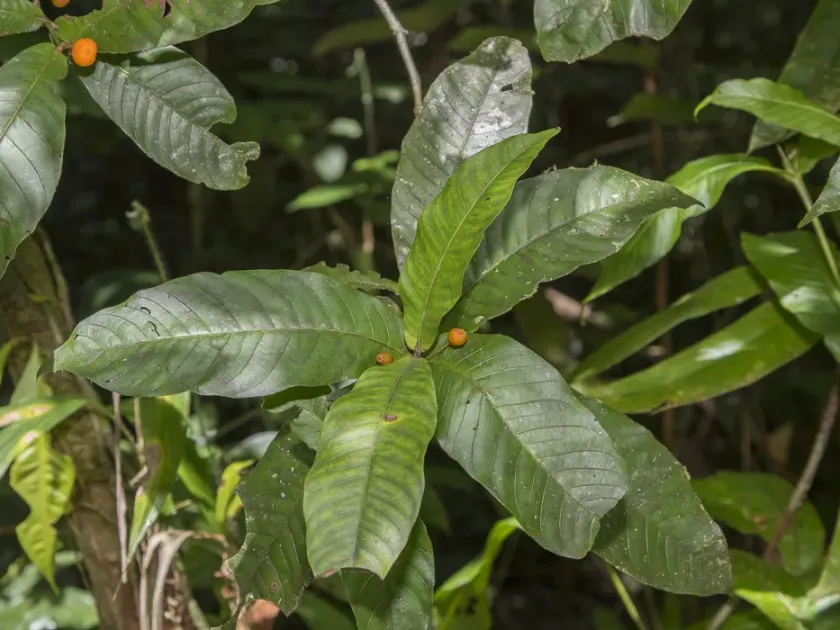
Quiina guianensis is a tropical evergreen tree or shrub belonging to the Quiinaceae family, which is often classified under the Ochnaceae family in contemporary taxonomy. It is primarily native to the humid tropical forests of South America, particularly in the Guianas and the Amazon basin.
This species thrives in high-humidity environments with stable temperatures throughout the year. It performs best in regions where the ambient temperature remains consistently between +22 and +30 degrees Celsius, reflecting its natural equatorial habitat.
Soil requirements for Quiina guianensis focus on acidity and drainage. The tree prefers rich, organic-heavy, and well-drained soils. While it appreciates moisture, it is sensitive to waterlogged conditions, which can lead to rapid root decay in poor drainage scenarios.
Regarding light, the plant exhibits significant shade tolerance during its early growth stages, making it an excellent candidate for the understory layer. As it matures, it requires light exposure, though it generally benefits from protection against direct, harsh tropical sunlight.
Proper cultivation management involves maintaining consistent soil moisture, often achieved by applying organic mulch around the base of the plant. This practice effectively mimics the natural leaf litter found on the rainforest floor, protecting roots and retaining necessary humidity.
Harvesting
The economic utility of Quiina guianensis is localized, primarily centering on the use of its wood for artisan construction and small-scale tool handles. The timber is valued for its density and unique grain patterns, making it suitable for specialized woodcraft.
The fruits of the plant serve as a supplementary food source for local communities and wildlife. While not a major commercial crop, there is ongoing interest in investigating its biochemical profile, as extracts from the leaves and bark may contain useful bioactive compounds.
Harvesting strategies are mostly artisanal, involving the manual collection of fruits or selective pruning of wood. Given that the plant is often wild-harvested, sustainable practices are encouraged to ensure the longevity of natural populations.
In agroforestry systems, this tree is promoted for its ability to stabilize soil and prevent erosion during intense tropical rainfall. By integrating the species into mixed-crop systems, farmers can maintain ecological balance while diversifying their forest resources.
While the species does not face widespread devastation from agricultural pests, it remains susceptible to fungal pathogens common in high-humidity areas. Disease management primarily involves ensuring adequate spacing and air circulation to prevent the accumulation of moisture on the foliage.