
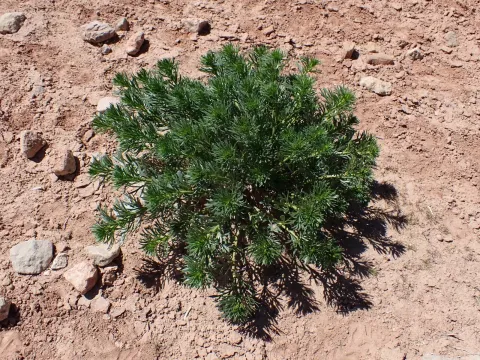
Peganum harmala
Peganum
Seeds of Peganum harmala are typically sown in late autumn or early spring, once soil temperatures reach 8–10 degrees Celsius. Stratification is recommended for uniform germination, making autumn sowing a preferred strategy for establishing large plantations.
What the section contains

Peganum harmala
The seeds should be sown at a depth of 1–2 centimeters, as they are sensitive to soil compaction but possess high viability. Light rolling after sowing is recommended to improve soil-to-seed contact, ensuring efficient moisture retention in arid environments.
The plant exhibits slow initial growth, focusing its energy on developing a deep taproot system during the first year. Seedlings should be thinned to a spacing of 30–40 centimeters once they develop two to three true leaves to prevent competition.
As a perennial crop, Peganum harmala can remain productive on the same site for 5–7 years with proper management, minimizing the need for frequent replanting.
Waterlogging must be strictly avoided during the sowing phase, as excess moisture in the root zone is detrimental. If planting in low-lying areas, adequate drainage systems are required to ensure crop survival.
Peganum harmala is a xerophytic plant naturally adapted to hot, semi-arid climates. It thrives best in well-drained, light-textured soils such as sandy loams, loams, or chestnut steppe soils, which prevent root asphyxiation.
The plant demonstrates remarkable salt tolerance, allowing it to grow in saline soils where other commercial crops often fail. Full, intense sunlight is essential for the plant to achieve its potential in synthesizing active alkaloids.
Optimal pH for the crop generally ranges from neutral to slightly alkaline. It is crucial to monitor soil drainage, as high moisture levels encourage rot and fungal infections, which significantly reduce the longevity of the stand.
The plant is highly frost-hardy, surviving significant temperature drops during dormancy. Its deep taproot allows the plant to access moisture reserves deep in the soil profile, making it a robust survivor in drought conditions.
Mineral fertilization should be applied cautiously, with a focus on phosphorus and potassium. Excess nitrogen often leads to excessive vegetative growth at the expense of chemical potency in the leaves and seeds.
Yield is primarily measured by the total dry biomass, which serves as the base for pharmaceutical extraction. In optimal conditions, one hectare can produce between 1.5 and 2.0 tonnes of dried raw material, depending on the age and density of the stand.
The concentration of key alkaloids—specifically harmine and harmaline—peaks during the full flowering stage. Harvesting is scheduled precisely during this period to maximize the pharmaceutical value of the final product.
Seed production yields range from 300 to 500 kilograms per hectare. These seeds are commercially valuable for their oil content and specific alkaloid profile used in various biochemical applications.
Regular maintenance, including weeding and soil aeration in the first two years, is vital for increasing biomass yields in subsequent seasons.
Harvesting timing is critical; delaying the harvest beyond the peak flowering stage results in harder, more fibrous plant tissue, which is significantly more difficult to process in milling equipment.
Peganum harmala is naturally resistant to many common agricultural pests due to its complex alkaloid profile, which acts as a chemical deterrent. However, high humidity can occasionally trigger outbreaks of powdery mildew.
Root rot remains the most significant threat to plantation health, usually caused by improper irrigation practices or poor soil drainage. Implementing a proper crop rotation plan is the best preventive measure against soil-borne pathogens.
Minor insect damage, such as from aphids or weevils, may occur on buds or foliage but rarely reaches an economic threshold that requires chemical intervention, reinforcing the plant's suitability for organic practices.
Early-stage weed control is the primary challenge in establishing the crop. Because of its slow early growth, competition with weeds can suppress the plants, necessitating manual or mechanical inter-row cultivation.
Following strict phytosanitary measures and site selection standards largely eliminates the need for pesticides, making Peganum harmala a sustainable choice for medicinal plant production.
The aerial parts of the plant are harvested during full bloom to ensure the highest concentration of active compounds. Mechanical harvesters are used to cut the plants at a height of 5–10 centimeters above the soil surface.
Harvested material requires rapid drying to prevent fermentation and fungal contamination. Drying is best performed in well-ventilated sheds or under covered structures to avoid degradation caused by direct UV radiation.
Seeds are harvested once they reach full maturity, indicated by a change in color to a dark brown. Harvest timing must be precise to prevent the pods from splitting and seeds from dropping, which would lead to significant loss.
After thorough drying, the raw material is cleaned of debris and stored in moisture-controlled conditions to maintain the stability of the alkaloids during transit and storage.
At the end of the crop's lifecycle, the soil should be deeply plowed to remove the deep taproots and prepare the field for the subsequent crop in the rotation cycle.