
Satureja salzmannii
Satureja salzmannii
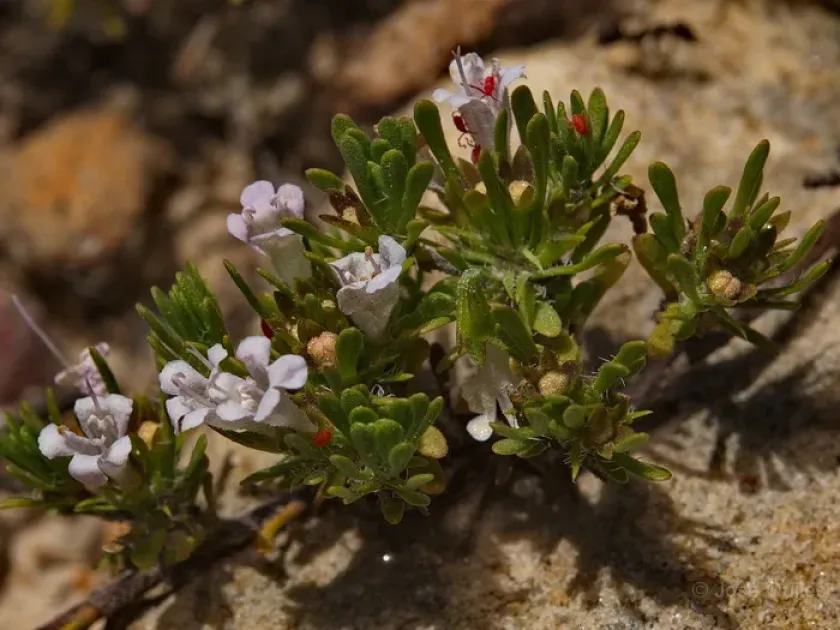
Description
Sowing dates
Sowing Satureja salzmannii in temperate climates is best performed in the spring once the soil temperature reaches at least 10–12 degrees Celsius.
The seeds of this culture are quite small, requiring a shallow covering of soil no deeper than 0.5–1 cm to ensure optimal germination and emergence.
For greenhouse cultivation or nursery production, seeds should be sown in March to ensure strong root system development before transplanting outdoors.
The recommended planting distance is 20–30 cm between plants within rows and 40–50 cm between rows to maintain proper air circulation.
This species also propagates effectively via cuttings during the summer months, allowing growers to maintain consistent characteristics of the mother plant.
Growing requirements
Satureja salzmannii is a member of the Lamiaceae family and is highly photophilous, requiring full sunlight to thrive throughout the growing season.
The plant prefers light, well-drained sandy or loamy soils with a neutral to slightly alkaline pH, mirroring its native Mediterranean conditions.
While the culture exhibits excellent drought tolerance, regular and moderate irrigation is essential during peak growth to maximize green mass production.
It is important to select sites protected from harsh northern winds, as water stagnation in the soil can lead to root system decay and mortality.
Given its natural evolutionary adaptation, this herb performs exceptionally well under high heat and intense direct solar radiation.
Yield
The overall yield of Satureja salzmannii is heavily dependent on the management practices and the frequency of harvests, which stimulate secondary growth.
Technical maturity is typically achieved within 60–80 days post-germination, at which point the plant forms a dense rosette of aromatic leaves.
Under intensive management with appropriate nutritional inputs, growers can achieve 2–3 complete harvests per season without jeopardizing overwintering capacity.
Harvesting for essential oil production or dried herb supply is best conducted at the peak of flowering when volatile compound concentrations are highest.
Commercial productivity remains stable and high if planting density and agronomic protocols regarding pruning are strictly followed throughout the cycle.
Main diseases and pests
Satureja salzmannii possesses high natural resistance to pests and pathogens, largely due to the potent antiseptic properties of its essential oils.
Root rot remains the most significant threat, typically occurring only as a result of improper irrigation and chronic waterlogging in the root zone.
During the early seedling stages, the crop may be susceptible to flea beetles, necessitating close monitoring and immediate protective measures if detected.
High humidity environments can lead to powdery mildew outbreaks, making proper spacing and weed control vital for maintaining plant health.
Disease prevention is primarily achieved through mechanical weeding, adequate soil aeration, and avoiding excessive nitrogen fertilization.
Harvesting
Harvesting should be performed in the early morning once the dew has evaporated to ensure the highest concentration of aromatic volatile compounds.
Stems should be cut approximately 5–10 cm above the soil surface, leaving sufficient dormant buds for the plant to regenerate during the next cycle.
For fresh market distribution, the harvested herbs must be packed in breathable, perforated bags immediately to prevent wilting and moisture loss.
Drying for storage must be conducted in a dark, well-ventilated space at temperatures below 35 degrees to preserve the delicate aromatic profile.
At the end of the final harvest, light mounding of the soil around the base is recommended to protect the root crown from sudden temperature drops.