
Joinvillea
Joinvillea
Joinvillea is a distinct genus within the Joinvilleaceae family, which is phylogenetically closely related to the Poaceae (grass) family. These plants are native to the islands of the Pacific Ocean, stretching from the Malay Peninsula to the Hawaiian Islands and New Zealand.
What the section contains

Joinvillea
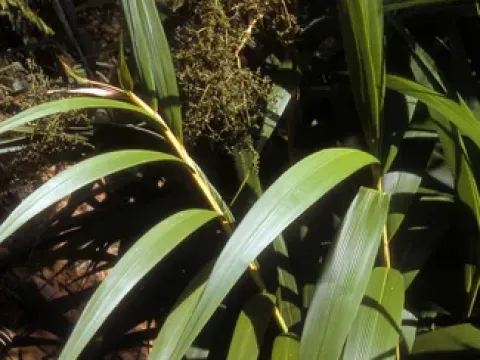
The plant exhibits a bamboo-like morphology, characterized by tall, sturdy, and often woody-based stems. Its leaves are large, pleated, and lanceolate, providing a unique architectural element that makes it highly recognizable among other tropical forest floor vegetation.
Regarding climatic requirements, Joinvillea thrives in tropical environments with high humidity and consistent warmth. It does not tolerate frost or cold drafts, which limits its outdoor cultivation to tropical or subtropical zones where temperatures remain stable throughout the year.
Optimal growth requires fertile, well-draining soils rich in organic matter. Gardeners must ensure that the planting medium remains moist, mimicking the leaf litter and high-organic content of its native habitat, while simultaneously preventing any waterlogging that could lead to root decay.
Economically and culturally, Joinvillea is primarily utilized for ornamental purposes due to its aesthetic appeal. Historically, the tough and flexible nature of its culms served local populations as a source of material for weaving, binding, and constructing lightweight structures.