
Joinvillea ascendens
Joinvillea ascendens
Description
Growing requirements
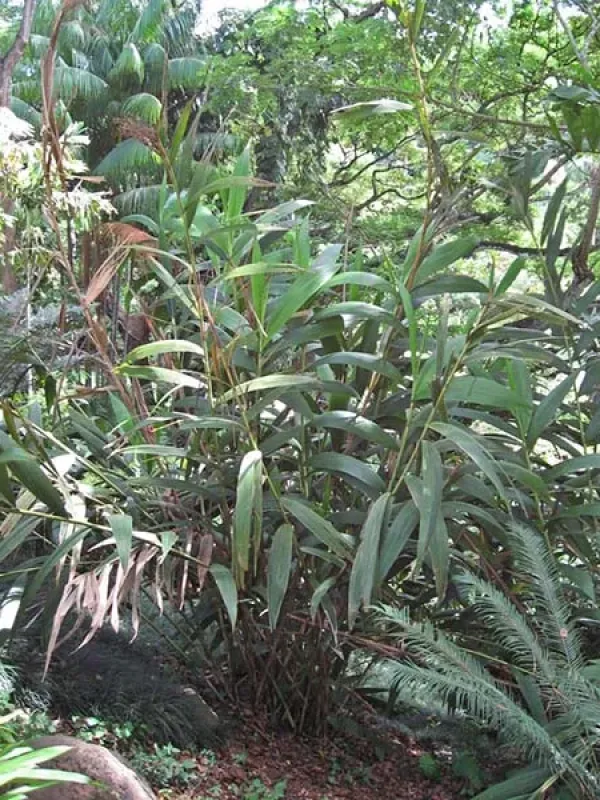
Joinvillea ascendens is a perennial monocotyledonous plant belonging to the small family Joinvilleaceae. It is characterized by its bamboo-like appearance, possessing tall, erect stems and long, lanceolate leaves that grow in a distinct spiral arrangement.
The plant is native to the Pacific Islands, including Hawaii, where it thrives in the understory of moist, tropical forests. Its distribution is typically restricted to high-altitude areas where cloud cover maintains the necessary ambient moisture.
Cultivation requires specific soil conditions, characterized by loose, well-draining organic matter. Providing consistent humidity is essential, as the plant lacks drought tolerance and can quickly suffer from dehydration in dry indoor or arid environments.
Temperature management is crucial for the development of Joinvillea ascendens. It requires a temperate, stable climate, ideally maintained between 20 and 25 degrees Celsius, without exposure to frost or extreme heat fluctuations which can damage its foliage.
In terms of utilization, this species is primarily valued as an ornamental specimen in botanical gardens or specialized collections. Its biological structure makes it an interesting subject for the study of primitive monocots and their evolution in isolated island ecosystems.