
Psorospermum febrifugum
Psorospermum febrifugum
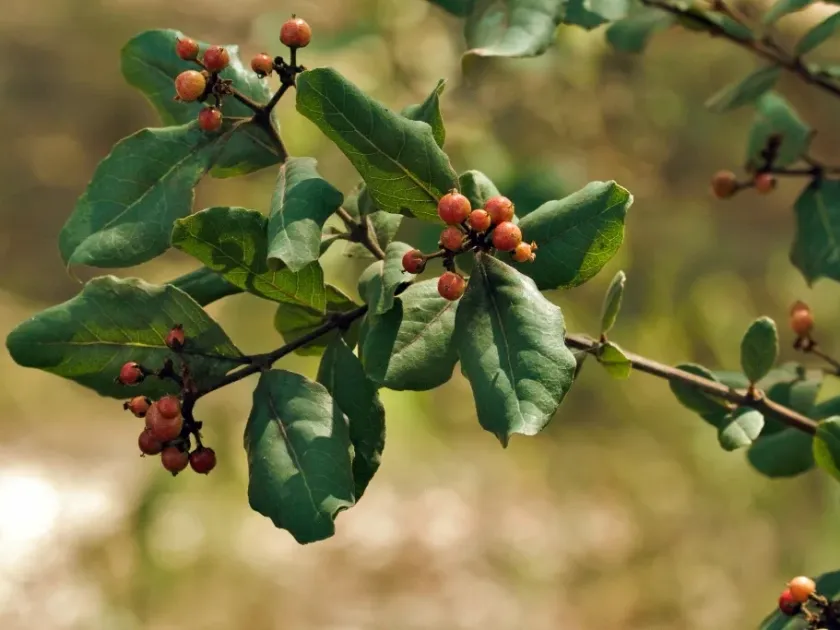
Description
Growing requirements
Psorospermum febrifugum is a shrub or small tree belonging to the Hypericaceae family, widely distributed across tropical African landscapes including savannahs and woodlands.
The plant thrives in well-drained, sandy-loam soils and is well-adapted to environments with distinct wet and dry seasons, ensuring seasonal dormancy and active growth phases.
It requires full to partial sun exposure to maximize photosynthetic efficiency, which is vital for the development of its chemical compounds used in traditional medicine.
Soil quality management is essential; while the plant is hardy, providing balanced organic fertilization during the seedling stage significantly accelerates its establishment.
Agrotechnical practices should focus on maintaining adequate spacing between plants to prevent root competition and allow for healthy canopy expansion over several years.
Yield
The economic and agricultural utility of Psorospermum febrifugum is primarily rooted in its pharmaceutical value, as the bark and roots are harvested for therapeutic properties.
Sustainable harvesting techniques are critical, involving the careful stripping of bark in segments to ensure the plant continues to thrive and produce secondary growth.
Yield efficiency peaks as the plant reaches maturity, typically after 4 to 6 years, providing a consistent supply of bark material if managed with careful pruning cycles.
Leaves are also collected for various uses, offering an additional harvest window during the rainy season when foliage production is most prolific.
Systematic plantation management of this species is an emerging field, aiming to standardize the quality of plant-based extracts for the global market.
Main diseases and pests
Fungal pathogens represent a significant threat during periods of high humidity, potentially causing root rot or foliar blight if drainage is poorly maintained.
Pests such as scale insects and leaf miners can stress the plant, leading to reduced vigour and lower yields of the desired medicinal components.
Preventive measures include regular inspection of the bark and leaves to catch infestations early and applying organic or targeted biological controls.
Proper air circulation through regular pruning of lower branches helps to mitigate the risk of micro-climatic humidity build-up around the base of the tree.
Strategic planting, avoiding monoculture practices in areas prone to specific tropical pests, serves as a natural barrier to large-scale disease outbreaks in the field.