
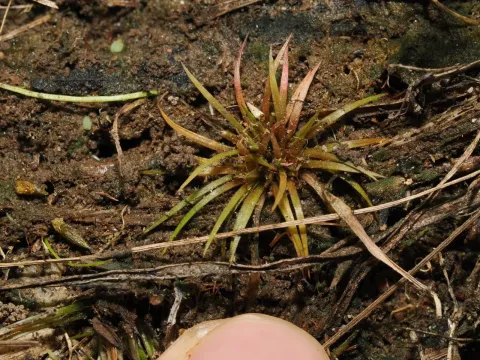
Trithuria
Trithuria
Trithuria is a genus of tiny, ephemeral aquatic and semi-aquatic plants belonging to the Hydatellaceae family. These plants are scientifically significant as they represent a very early divergence in the evolutionary history of flowering plants, offering insights into the structure of ancient flora.
What the section contains

Trithuria
The geographic range of this genus is primarily concentrated in the Southern Hemisphere, particularly in Australia, New Zealand, and parts of India. These plants typically inhabit specialized wetlands, such as ephemeral pools and periodically flooded sandy or muddy substrates.
Botanically, Trithuria is characterized by a reduced body plan. They lack complex vascular structures found in higher plants, and their flowers are simplified, consisting of minimal parts that favor self-pollination or specific reproductive strategies suited for aquatic environments.
Environmental requirements for these plants are extremely precise. They thrive in oligotrophic, acidic soils with high levels of moisture. Fluctuations in water levels are essential for their life cycle, as they are adapted to both seasonal submersion and the drying of their habitat.
Due to their highly specialized niche and sensitive nature, Trithuria species are not used in commercial agriculture. Their value lies strictly in scientific research and conservation biology, as they serve as sensitive indicators of environmental health in fragile wetland habitats.