
Trithuria submersa
Trithuria submersa
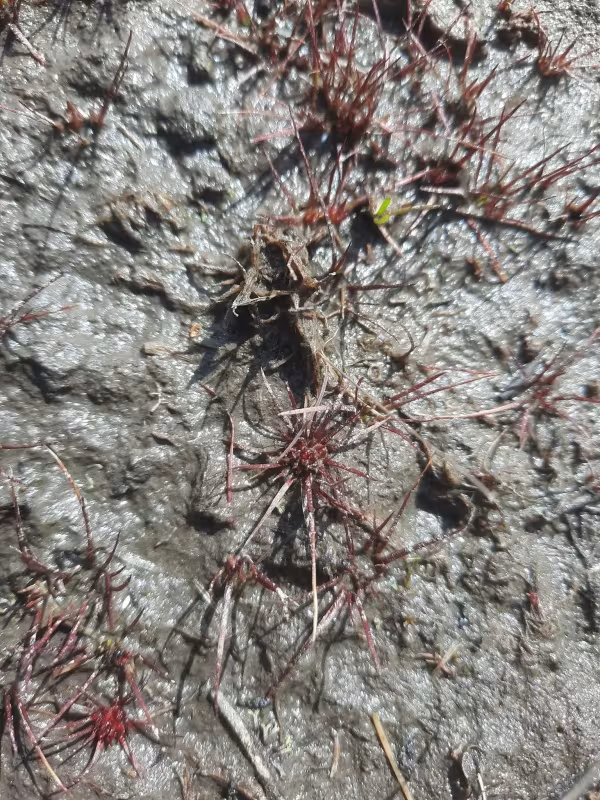
Description
Growing requirements
Trithuria submersa is an exceptional aquatic plant species belonging to the family Hydatellaceae. It is widely recognized by botanists as a representative of one of the most ancient lineages of flowering plants.
The natural distribution of this plant is restricted to specific aquatic environments within Australia. It typically inhabits shallow wetlands, ephemeral ponds, and seasonal marshes where water levels fluctuate throughout the year.
Botanically, the plant shows significant adaptation to aquatic life. It is capable of completing its entire life cycle, including pollination and seed production, while remaining completely submerged underwater.
For successful development, it requires a nutrient-rich silty substrate. The plant thrives in soft, slightly acidic water conditions with adequate light penetration for photosynthesis to occur efficiently.
While Trithuria submersa does not serve a commercial agricultural purpose, its role in evolutionary biology is significant, as it provides insights into the early diversification of angiosperms.
Main diseases and pests
The primary threats to this species are habitat destruction, land reclamation, and the drainage of wetlands, which directly destroy the plant's natural growing environments.
Water pollution, particularly the runoff of nutrients from agricultural fields, leads to eutrophication and algal blooms, which negatively affect the plant's light exposure.
Invasive plant species pose a significant threat by competing for space and nutrients in shallow ponds, effectively displacing the more sensitive Trithuria populations.
Climate-driven changes in rainfall patterns often cause ephemeral ponds to dry up prematurely, which severely interrupts the reproductive cycle of the plants.
Conservation of the species relies heavily on the protection of wetland ecosystems and the maintenance of a stable hydrological regime in the regions where it is endemic.