
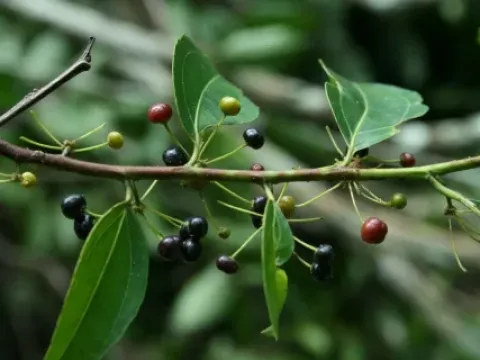
Goupia
Goupia
Goupia is a genus of tropical trees belonging to the family Goupiaceae. These trees are prominent components of the South American rainforests, characterized by their tall, slender stems and broad, dense canopies. As a key species in these ecosystems, Goupia plays a vital role in maintaining forest structure and carbon sequestration.
What the section contains

Goupia
The native range of Goupia extends across the northern regions of South America, primarily within the Amazon basin and parts of the Guiana Shield. Countries such as Brazil, French Guiana, and Suriname are the primary habitats where these trees flourish, preferring areas with high precipitation levels and consistent tropical temperatures throughout the year.
Regarding growing requirements, Goupia thrives in humid equatorial climates. It is highly sensitive to moisture stress and requires deep, well-drained soils that can hold adequate water without becoming waterlogged. While it can adapt to various soil textures, the species performs best in nutrient-rich forest soils that support rapid juvenile growth.
Agrotechnical management in forestry focuses on light management for young trees. Because Goupia is a heliophilic species (light-loving) during its early development phases, professional forestry practices often include selective thinning to ensure that emerging saplings receive sufficient sunlight for healthy trunk development and vertical growth.
The economic value of Goupia is centered on its timber, which is commercially known as "cupi." This wood is highly valued for its durability, structural strength, and resistance to environmental degradation. It is widely utilized in heavy construction, bridge building, and flooring, making it a sustainable and reliable resource for the lumber industry.