
Blidingia
Blidingia
Blidingia is not a conventional agricultural crop and is not grown by sowing seeds. As a marine green alga, its propagation occurs naturally through the dispersal of spores that settle on suitable hard substrates.
What the section contains

Blidingia
In controlled aquaculture, biomass formation begins by attaching zoospores to artificial carriers such as nets or ropes. The optimal period for the start of colony growth usually occurs during the spring months as water temperatures rise.
The attachment of algal germs requires a stable coastal zone with moderate currents. In the wild, Blidingia successfully colonizes intertidal zones, using rocks, wooden structures, or shellfish for anchorage.
During artificial cultivation, agronomists aim to ensure sufficient spore density to colonize the substrate. Using special incubation tanks allows for the monitoring of gametophyte development before transferring them to marine farms.
The developmental cycle is closely linked to the photoperiod; therefore, considering the seasonal activity of the algae is essential for maximizing biomass harvest. Artificial lighting control in laboratories allows for population maintenance throughout the year.
Blidingia belongs to the Ulvaceae family and is a typical representative of marine flora adapted to living in the intertidal zone.
This seaweed demonstrates high resistance to fluctuations in water salinity, allowing it to colonize estuaries and coastal areas with variable hydrological regimes.
Normal thallus development requires sufficient light, as Blidingia is an active photosynthesizer. It prefers well-aerated coastal areas with significant water movement.
The temperature range for Blidingia growth is quite broad, although the most intensive biomass accumulation occurs during the moderate water temperatures of the summer season.
Water quality requirements include the presence of essential nutrients such as nitrogen and phosphorus, which stimulate rapid vegetative growth of the algae.
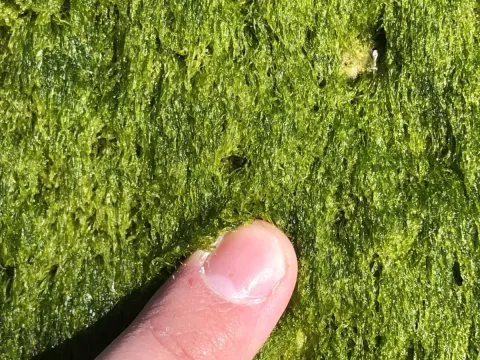
Blidingia yield depends heavily on the quality of the substrate and light levels in the growth zone. Under favorable conditions, the algae can form dense mats that cover significant areas.
In industrial biomass harvesting, the recovery rate of the population after cutting is a key factor. An optimal harvest schedule allows for multiple yields within a single warm season.
Productivity metrics can reach several tons of wet mass per hectare under intensive cultivation conditions. A large portion of the harvest is utilized for animal feed additives or bio-fertilizers.
To improve yields, intensification methods are applied, including the application of liquid nutrients in the coastal zone. However, the species' natural ability for vegetative reproduction remains the primary factor.
Specific yield data depend on the species within the Blidingia genus, as different representatives have varying metabolic rates and dry matter accumulation patterns.
The primary threats to Blidingia populations are extreme levels of water pollution caused by heavy metals and industrial effluents, which inhibit gametophyte development.
Grazing by marine herbivores, such as certain species of mollusks or small crustaceans, can lead to significant biomass losses on farms.
Pathogenic microorganisms affecting green algae include various bacteria and fungal infections that cause thallus necrosis under high-density cultivation.
Changes in hydrodynamic regimes, such as coastal siltation, block light access to the seaweed, leading to the decline of plantations.
Competition from other algae species and epiphytes often limits the available space for Blidingia growth, displacing it from optimal substrates.
Harvesting is mainly carried out manually or using mechanized rakes that allow for cutting the biomass without damaging the base of the algae.
It is crucial to harvest before the onset of mass sporulation to preserve the nutritional value of the thallus and ensure a basis for the next vegetative cycle.
Freshly harvested biomass loses moisture quickly, so it must be transported to processing facilities promptly. Traditional preservation methods include sun drying or centrifugal dehydration.
On an industrial scale, equipment is used to wash the seaweed and remove sand and small marine organisms. Thorough cleaning is a critical step in raw material preparation.
After collection and processing, the production is classified based on purity and micronutrient content, determining its further use in agriculture or the food industry.