
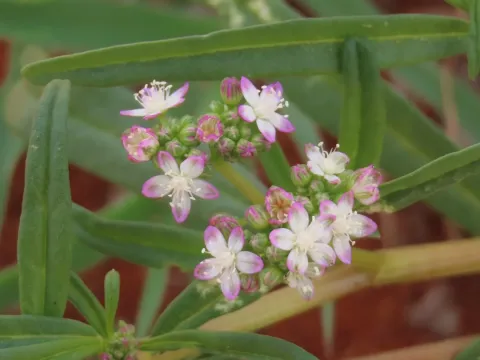
Gisekia
Gisekia
Gisekia is a genus of herbaceous plants, mainly annuals, belonging to the Gisekiaceae family. In their natural habitat, germination typically occurs when temperatures consistently remain above 20-25 degrees Celsius.
What the section contains


Gisekia
For agricultural cultivation, seeds should be sown in well-warmed soil once the risk of frost has passed. Seeds are small and require minimal covering, as light plays a crucial role in their germination process.
Adequate moisture must be provided during the initial two-week period to ensure the establishment of a robust root system. This foundation allows the plant to handle subsequent heat and water stress effectively.
In tropical and subtropical regions, the ideal planting time is at the onset of the rainy season. This allows the plants to utilize available moisture for rapid vegetative growth before peak temperatures arrive.
Successful cultivation in experimental fields shows that structured soils with sandy amendments provide the best conditions for seed germination. The plants quickly develop a mat-like coverage that protects the ground.
As a xerophytic plant, Gisekia requires intense sunlight and is highly sensitive to shading. Insufficient light exposure will lead to weak stems and a significant reduction in overall biomass production.
The plant thrives in light, well-drained sandy or loamy soils with neutral to slightly alkaline pH levels. Poor drainage and waterlogged soil are extremely detrimental to the plant's health and vitality.
Gisekia is remarkably salt-tolerant, which makes it an excellent candidate for land reclamation efforts and restoring degraded soils in arid areas of Africa and Asia.
The thermal optimum for active growth ranges between 25 and 35 degrees Celsius. Extreme temperature fluctuations, particularly cold nights, can inhibit metabolic processes in the plant's tissues.
While nitrogen-rich fertilizers can boost biomass growth, they should be applied cautiously. Over-fertilization might disrupt the concentration of secondary metabolites naturally produced by the plant.
The primary threats to Gisekia are fungal pathogens that flourish in high humidity or over-irrigated conditions. Root rot is a common issue caused by soil-borne pathogens in poorly drained sites.
Pests such as spider mites may infest the crop during prolonged droughts when the plant's natural resistance is compromised. Aphid attacks are occasionally observed, specifically in closed-system environments.
To prevent disease outbreaks, it is essential to maintain proper crop rotation and avoid overcrowding. Providing space between plants improves airflow, which helps keep the root zone dry.
The use of systemic fungicides should be limited to severe cases, as the plant can be sensitive to chemical treatments. Preventative measures such as careful water management are highly recommended.
Early-stage weed control is critical for successful cultivation, as Gisekia struggles to compete with faster-growing weeds for nutrients and water during the seedling stage.