
African gisekia
Gisekia africana
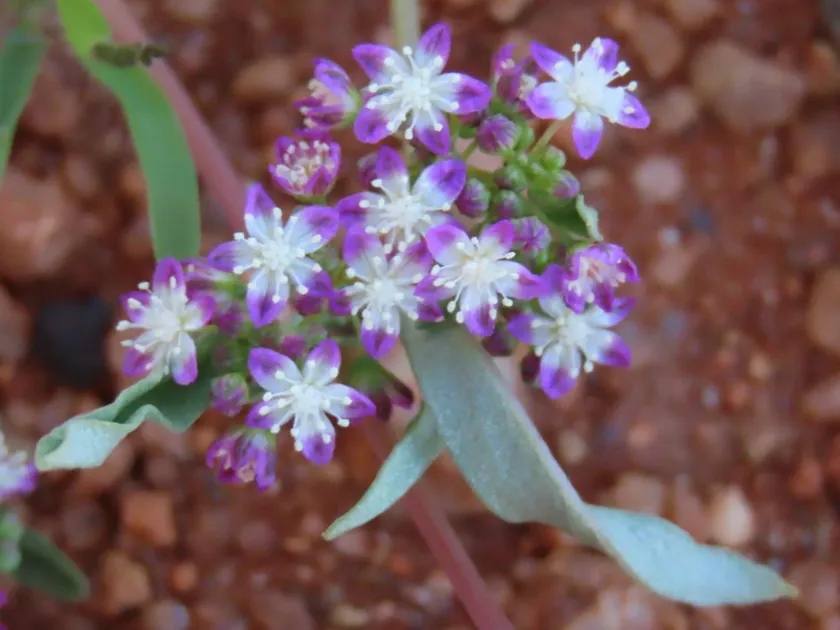
Description
Growing requirements
African gisekia (Gisekia africana) is a botanical species belonging to the Gisekiaceae family. It is a succulent or semi-succulent herbaceous plant that has evolved to thrive in harsh, semi-arid, and desert-like environments across Africa.
The plant originates from the southern and eastern regions of the African continent. Its natural distribution is linked to areas with low annual precipitation and high temperatures, where it plays a role in stabilizing arid soils.
In terms of soil requirements, this culture performs best in sandy or rocky terrain with exceptional drainage capabilities. It is notably tolerant to saline soil conditions, which makes it a resilient candidate for challenging agricultural environments.
Agricultural management is relatively simple due to the plant's high resistance to abiotic stress. It requires full exposure to sunlight and is strictly intolerant of waterlogging, which often leads to root rot.
To cultivate the plant successfully, farmers must ensure that planting densities remain low to prevent humidity buildup around the foliage, as high moisture levels are detrimental to its health.
Harvesting
The harvesting process involves cutting the aerial biomass, which in many local contexts serves as supplemental forage for livestock. It is valued for its ability to provide green matter during the dry season.
Timing the harvest is critical and is generally focused on the late flowering stage. This timing ensures the highest nutritional value and biomass volume before the plant begins to lignify.
Due to the prostrate growth pattern of the species, mechanical harvesting is impractical, leading farmers to rely on manual harvesting techniques that protect the plant's root system for potential regrowth.
Post-harvest handling is centered on rapid solar drying to reduce the water content in the succulent stems, which prevents fermentation and mold growth during the storage period.
Beyond its use as fodder, current agricultural research is investigating the chemical profile of the plant for potential secondary metabolites that could be utilized in various industrial applications.