
Common stork's-bill
Erodium cicutarium (L.) LʼHér.
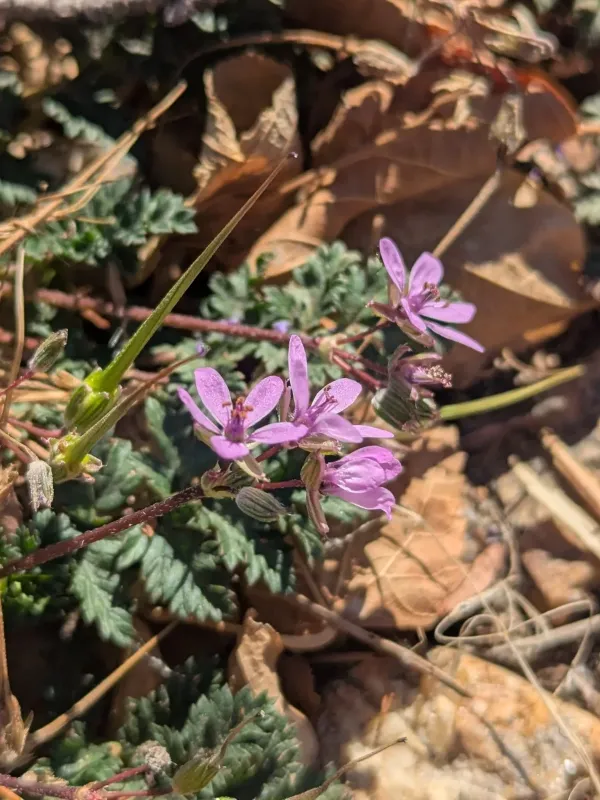
Description
Sowing dates
Common stork's-bill (Erodium cicutarium) belongs to the Geraniaceae family. It is an annual plant characterized by its rapid growth cycle and adaptability to various environmental conditions.
Seeds are typically sown in early spring or late autumn. The plant prefers light, sandy soils with good drainage, which supports its taproot system during the early stages of development.
Seeding depth should be kept shallow, between 1 and 2 centimeters, to ensure rapid emergence. Uniform distribution is crucial to optimize the canopy cover and suppress potential weed competition.
Agronomic management involves surface cultivation before sowing to ensure a clean seedbed. The plant demonstrates high germination rates even under fluctuating temperatures, making it a reliable choice for different climates.
Due to its resilience, it is often utilized as a pioneer species in land reclamation efforts or as part of a diversified fodder strategy for livestock.
Growing requirements
This species is highly light-demanding and thrives in sunny, open locations. It exhibits significant drought tolerance, allowing it to survive in arid regions where other crops might fail.
It prefers well-drained, nutrient-poor to moderately fertile soils. It is particularly effective at stabilizing soils in areas prone to wind erosion due to its dense, spreading growth habit.
The ideal climatic conditions for growth range from moderate to warm temperatures. While it can withstand light frost, it grows most vigorously in the spring and early summer.
The plant is not particularly sensitive to soil acidity, making it suitable for a wide range of agricultural sites. Proper ventilation and sun exposure are necessary to maintain its health.
Excessive moisture is detrimental, as it can lead to root rot and reduce the overall quality of the harvested biomass if the soil remains waterlogged for extended periods.
Yield
The primary agricultural use is as a nutritious fodder crop, particularly for grazing livestock in early spring. It contributes to biomass production when other forage sources are limited.
Medicinal usage involves harvesting the aerial parts during the flowering stage. The plant is valued for its pharmacological compounds, which are extracted for various health-related applications.
Yield varies based on soil quality and moisture availability, but well-managed stands can provide significant amounts of green forage per hectare throughout the growing season.
For industrial or medicinal processing, the material must be dried carefully to preserve essential vitamins and tannins. Efficient handling during the drying process ensures high-quality output.
Strategic harvesting cycles allow for multiple cuts during the season, provided the plant is managed properly to encourage vegetative regrowth rather than immediate seed production.
Main diseases and pests
Erodium cicutarium is generally robust, but high humidity levels can promote powdery mildew. Preventive measures include ensuring good air circulation within the plant canopy.
Aphids are the most common pests, targeting the tender shoots and leaves. Integrated pest management, including monitoring and biological control, is recommended for sustainable production.
Competition from more aggressive, invasive weeds can be a challenge during the seedling phase. Timely field maintenance helps to mitigate this risk.
Root-related diseases are rare but can occur if the soil structure is severely compromised by waterlogging or previous chemical misuse in the field.
Practicing crop rotation is essential for long-term soil health and to minimize the buildup of host-specific pathogens within the agricultural system.
Harvesting
Harvesting for fodder is best performed at the onset of flowering. This stage offers the best balance between biomass volume and nutritional content for livestock.
For medicinal purposes, the foliage must be collected when the concentration of active compounds is at its peak. Using specialized mowing equipment ensures an efficient and clean harvest.
Post-harvest management involves immediate transport to a drying facility. Controlled drying temperatures are necessary to prevent the loss of active ingredients in the plant tissue.
Seed harvesting requires careful timing, as the seeds shatter easily upon maturity. Machinery should be calibrated to minimize seed loss and maximize yield efficiency during collection.
After harvesting, cleaning and sorting are necessary to remove debris and ensure the final product meets agricultural or market standards for quality and purity.