
Golden Storksbill
Erodium chrysanthum L'Hér. ex DC.
Description
Growing requirements
The Golden Storksbill (Erodium chrysanthum) is a charming perennial belonging to the Geraniaceae family. Native to the rocky limestone slopes of Greece, this plant is well-adapted to harsh, dry conditions and is a popular choice for rock gardens and alpine beds.
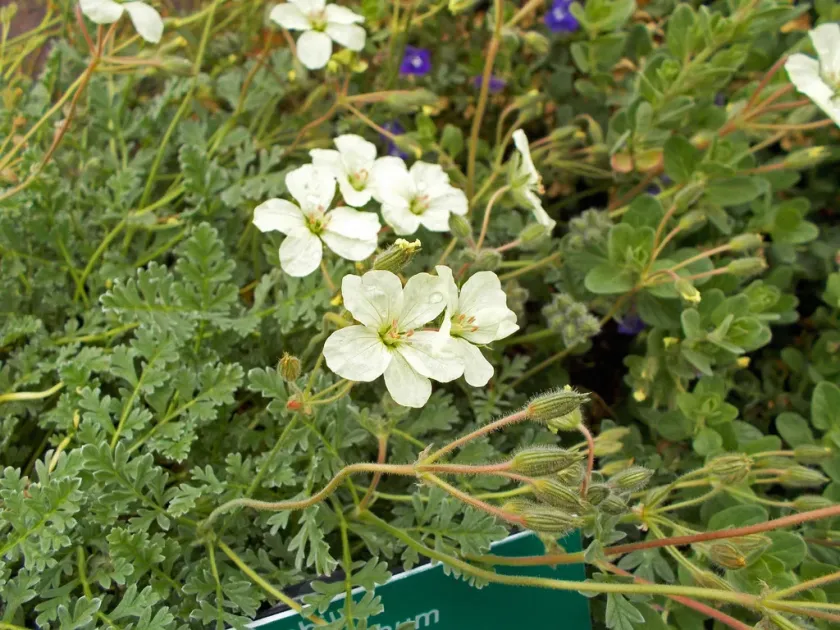
Botanically, it is recognized for its finely divided, silver-grey foliage and striking pale yellow, cup-shaped flowers. It grows in a compact mound, providing a long-lasting aesthetic appeal due to its foliage, which remains attractive throughout the growing season.
Successful cultivation requires excellent soil drainage, as this plant is extremely sensitive to waterlogged conditions. It thrives in gritty, alkaline, or neutral soils that mimic its natural mountainous environment. It is essential to avoid heavy, clay-based soils that retain too much winter moisture.
Exposure to full sunlight is crucial for this species. In insufficient light, the plant tends to lose its compact, mounded shape, and the distinct silvery color of the leaves may fade, while flower production decreases significantly compared to plants grown in optimal sun exposure.
In terms of maintenance, the Golden Storksbill is relatively low-needs once established. However, growers must ensure that the crown of the plant is kept dry, especially during wet winters. Using a top dressing of grit or gravel around the base helps prevent direct contact with soil moisture.
Main diseases and pests
The most significant threats to Erodium chrysanthum are fungal pathogens, specifically those causing crown rot. These issues are almost always linked to poor drainage or overly humid environmental conditions that do not allow the plant's root system to dry out between watering cycles.
Pest pressures are generally minimal, although aphids can occasionally infest the flower buds during late spring. Proper spacing to ensure good air circulation around the plants is a proactive measure that helps reduce the incidence of both pests and fungal diseases in the garden.