
California macrophylla
California macrophylla
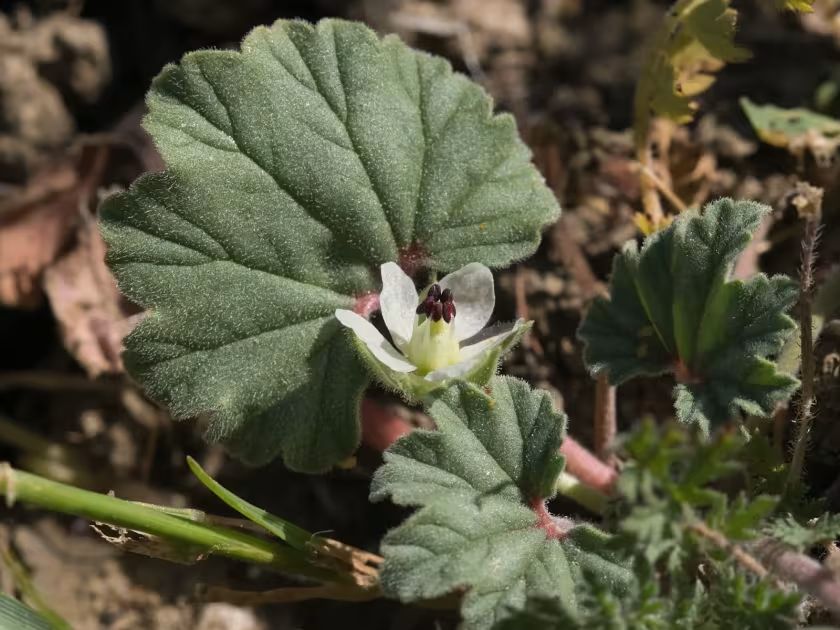
Description
Sowing dates
California macrophylla, a member of the Boraginaceae family, requires specific sowing techniques to ensure successful germination. In agricultural practice, seeds are typically sown during the late autumn, allowing the cold winter period to act as natural stratification.
For greenhouse cultivation or controlled environments, seeds should be pre-treated with cold exposure for approximately 3–4 weeks before planting. This process helps to break dormancy and improves the uniformity of seedling emergence in the spring.
The sowing depth is crucial for this species. Seeds should be placed at a depth of 5–10 millimeters and lightly pressed into the soil. Ensuring good soil-to-seed contact is essential for moisture uptake during the initial germination phase.
Optimal germination temperatures range between 12°C and 18°C. During this period, the substrate must remain consistently moist but not waterlogged. Overwatering can lead to seed rotting, which is a common failure point in early crop establishment.
After emergence, seedlings require adequate spacing to prevent competition. Thinning is recommended to maintain a density that allows for optimal leaf development and airflow, reducing the risk of damping-off diseases during the early vegetative stage.
Growing requirements
The crop thrives in well-drained, sandy loam soils that possess a balanced nutrient profile. The soil structure should be porous enough to allow for deep root penetration, as California macrophylla develops an extensive root system during its growth cycle.
Climate adaptability is a significant trait of this species, though it prefers regions with a Mediterranean-type climate characterized by wet winters and dry, warm summers. Extreme heat during the flowering phase can negatively impact seed set.
Light availability is paramount for the health of California macrophylla. While the plant can tolerate partial shade in the hottest parts of the day, it requires at least 6–8 hours of direct or bright indirect sunlight to sustain high photosynthetic rates.
Water management must be precise. During the rapid growth phase, the plants require moderate irrigation to maintain turgor pressure. However, as the plant matures and approaches its dormant or reproductive stage, irrigation levels should be scaled back significantly.
Soil nutrient levels should be managed via balanced fertilization. A high potassium content is beneficial for improving the structural integrity of the leaves and stems, while excessive nitrogen should be avoided to prevent weak, succulent growth susceptible to pests.
Main diseases and pests
Root pathogens, particularly Pythium species, pose the greatest threat to California macrophylla. These fungi thrive in cool, damp soils where poor drainage persists, leading to rapid decay of the root system and eventual plant death.
Insects like aphids and spider mites are frequent nuisances. Aphids tend to congregate on the undersides of leaves and on terminal buds, stunting growth, while spider mites cause significant damage by depleting leaf chlorophyll, leading to chlorosis and leaf drop.
Fungal leaf spots can occur when humidity levels remain high for extended periods without adequate air circulation. These spots can coalesce, covering large leaf areas and significantly reducing the overall vigor and yield potential of the plant.
Effective management involves the implementation of cultural practices such as wide row spacing and weed control to promote canopy ventilation. These steps significantly reduce the micro-environment favorable to fungal pathogen development.
If chemical or biological intervention becomes necessary, treatments should be applied during early infestation stages. Integrating predatory insects such as lacewings or lady beetles can be highly effective in controlling pest populations in a sustainable manner.