
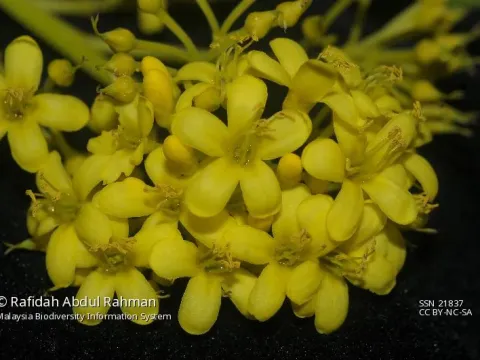
Pteleocarpa
Pteleocarpa
Pteleocarpa is a genus of tropical woody plants belonging to the family Gelsemiaceae, notable for its distinct biological structure and habitat niche.
What the section contains

Pteleocarpa
The native distribution of this plant is concentrated in the tropical rainforests of Southeast Asia, specifically across parts of Malaysia, Sumatra, and Borneo.
As a tropical species, it thrives in environments characterized by high humidity levels and consistent, warm temperatures throughout the entire year.
Optimal growth requires well-drained, nutrient-rich forest soils that support deep root penetration while preventing the accumulation of excess water.
Successful management of this crop involves simulating natural understory light conditions to protect young plants from excessive heat and transpiration stress.
The primary threats to Pteleocarpa health in managed environments include fungal pathogens that thrive in high-humidity microclimates.
Insects, particularly foliage-feeding larvae and various beetles, pose a risk to the integrity of the canopy and overall plant vigor.
Soil-borne pathogens can induce root rot, especially in instances where soil aeration is insufficient or drainage systems fail.
Competition from fast-growing invasive weeds in the vicinity can suppress the development of young Pteleocarpa saplings during establishment.
Integrated pest management strategies are essential to monitor for signs of chlorosis or structural damage caused by potential biological stressors.