
Funaria
Funaria
Funaria is a genus of mosses belonging to the Funariaceae family. It is widely recognized due to its presence as a pioneer species in various habitats, particularly on sites affected by fires or significant surface disturbances where mineral-rich soil is exposed.
What the section contains

Funaria
The plant requires specific environmental conditions to thrive, including high humidity and stable soil moisture. It is particularly noted for its preference for substrates that have been exposed to high temperatures, showing a remarkable adaptation to post-fire ecological niches.
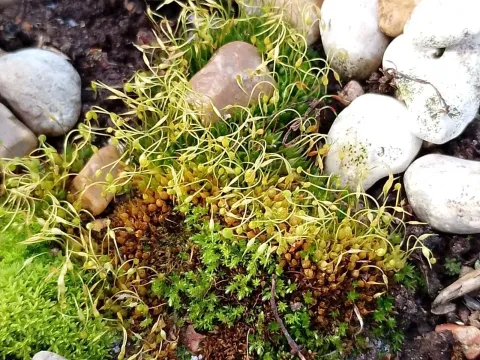
Botanically, Funaria is characterized by a protonema stage that allows for rapid colonization of the substrate. The moss forms small, green patches with distinctively structured sporophytes, which are held on long, slender stalks that respond to changes in moisture levels.
Soil requirements for Funaria generally involve a neutral or slightly alkaline reaction. Its presence in agricultural landscapes can serve as a natural indicator of soil health and specific chemical compositions resulting from previous land use practices.
Although not a cultivated agricultural crop, the study of Funaria provides essential data for land reclamation strategies and assessing the long-term impact of environmental factors on soil biodiversity.
Excessive acidification of the soil represents a major threat to Funaria, as it disrupts the physiological processes of the moss and inhibits its growth.
The encroachment of dominant vascular plants and grasses often limits the distribution of Funaria, as these plants outcompete the moss for space and light resources.
Agricultural activities, such as intensive tilling and the heavy use of synthetic fertilizers, create unsuitable microclimates that prevent the establishment of healthy Funaria colonies.
Infection by various fungal pathogens can occur when excessive moisture causes waterlogging, damaging the delicate tissues of the moss and its reproductive structures.
The application of chemical herbicides and soil-surface treatments significantly reduces the vitality of the protonema, leading to the local extinction of populations in agricultural zones.