
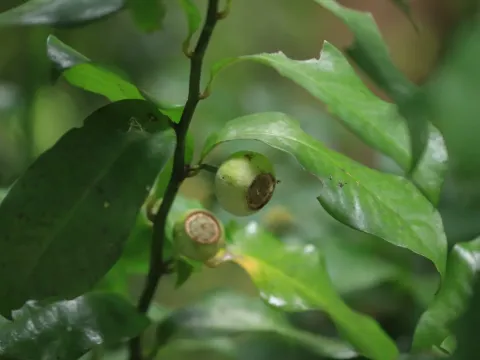
Eupomatia
Eupomatia
Eupomatia belongs to the Eupomatiaceae family and is a significant subject for both botanical collection and specialized ornamental horticulture. In their natural habitat, these are evergreen shrubs or small trees featuring glossy, leathery leaves that command attention due to their distinct foliage texture.
What the section contains

Eupomatia
The origin of this culture is Eastern Australia and New Guinea, where the plants thrive in humid tropical and subtropical forest environments. Their natural distribution is restricted to regions characterized by high annual precipitation and stable, warm temperatures throughout the year.
A primary requirement for successful cultivation is the provision of organic-rich, well-drained soil with an acidic to neutral pH. The plant is extremely susceptible to root rot caused by waterlogging, thus necessitating an effective drainage system when grown in controlled environments like greenhouses.
High relative humidity is critical for Eupomatia, rendering it unsuitable for dry indoor climates unless specialized humidification systems are utilized. The optimal temperature range for steady vegetative growth is between 18 and 26 degrees Celsius.
In its native forest floor habitat, the plant prefers dappled shade or indirect light. Direct sunlight can cause significant leaf scorch, making the management of light intensity an essential factor for successful cultivation and plant health.
The primary threats to the plant in protected cultivation are fungal root diseases, which typically develop due to excessive substrate moisture. Prevention relies on strictly controlled watering regimens and the application of fungicides at the earliest signs of root decay.
Common insect pests affecting Eupomatia include scale insects and mealybugs. These sap-sucking pests inhabit young shoots and leaf axils, leading to stunted plant growth and the degradation of the plant's overall aesthetic quality.
Aphids frequently target soft, succulent new growth during the spring season, requiring consistent visual monitoring of the collection. The use of contact or systemic insecticides is advised depending on the severity of the infestation.
The two-spotted spider mite poses a significant risk if the humidity levels drop too low and the air becomes overly dry. Frequent misting and the maintenance of high atmospheric humidity are the best preventative strategies against these pests.
Effective sanitation, including timely pruning of dense crown areas, is vital to prevent pathogen outbreaks. A well-ventilated, healthy plant is inherently more resistant to opportunistic pests and bacterial or fungal infections.