
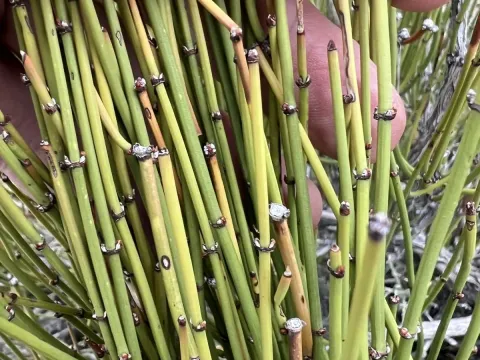
Ephedra
Ephedra
Propagation of Ephedra is primarily conducted through seeds or by vegetative division of established shrubs. Sowing seeds in open ground is best performed in late autumn, allowing for natural stratification during the winter months to improve germination rates in spring.
What the section contains

Ephedra
When sowing in spring, seeds require pre-treatment such as cold stratification for several weeks to break dormancy. Proper moisture management during the germination phase is critical, as seeds and seedlings are sensitive to desiccation.
Vegetative propagation by division involves careful separation of mature plants during early spring before the start of the active growing season. Each section must include a healthy root system to ensure successful establishment.
Young plants require consistent monitoring during their first year, particularly regarding weed control, which is essential to reduce competition for nutrients and water. Establishing a suitable planting density is crucial for long-term productivity.
The spacing between plants usually ranges from 50 to 80 centimeters, depending on the species and site conditions. This distance provides adequate space for root expansion and facilitates mechanical maintenance operations between rows.
Ephedra is the type genus of the family Ephedraceae, consisting of perennial evergreen shrubs that have evolved to thrive in arid and semi-arid regions. These plants are true xerophytes, displaying remarkable resilience to extreme climate conditions.
The primary environmental requirement for Ephedra is high light intensity. Optimal growth and secondary metabolite synthesis, specifically alkaloids, depend on receiving direct sunlight throughout the day. Shaded environments drastically reduce plant health and yield.
Soil requirements focus on excellent drainage rather than high fertility. Ephedra thrives in sandy, gravelly, or rocky substrates where water stagnation is impossible. Heavy, clay-rich soils should be avoided, as they promote root rot.
While mature plants are exceptionally drought-tolerant, supplemental irrigation during the establishment phase is highly beneficial. Once the root system is well-developed, the plants can survive prolonged periods without external water input.
The species is generally hardy, capable of surviving cold winters and high summer heat. This tolerance to wide temperature fluctuations makes the plant a suitable candidate for cultivation in various continental climates.
The economic yield of Ephedra is centered on the concentration of alkaloids, particularly ephedrine and pseudoephedrine, found in the green stems. Harvesting is typically delayed until the plants reach 4–6 years of age to ensure high potency.
The harvest cycle is highly dependent on environmental factors and the specific species being cultivated. Yield can be optimized by strategic pruning, which encourages the growth of new, younger stems that are richer in active compounds.
Sustainable harvesting involves removing no more than two-thirds of the annual growth. This conservative approach preserves the vitality of the plant and ensures consistent production capacity over many successive years.
Yield management requires careful balancing of plant density and individual plant health. Overcrowding can lead to increased pest pressure and reduced individual growth rates, negatively impacting the total alkaloid output per hectare.
Post-harvest processing is a critical component of the yield chain. Rapid drying under controlled temperatures prevents the degradation of thermolabile alkaloids, ensuring that the harvested material maintains its medicinal value.
Ephedra is generally robust against many common agricultural pests; however, it remains susceptible to fungal pathogens in environments with high humidity or poor soil drainage. Root and crown rots are the most serious threats in these conditions.
Sucking insects, such as aphids or spider mites, can damage the succulent green stems, particularly in hot and dry weather. Regular field scouting is necessary to detect and mitigate these populations before significant damage occurs.
Weed management is a vital aspect of crop protection. In the early stages of establishment, weeds can quickly overshadow young plants, robbing them of essential sunlight and soil resources required for survival.
Integrated pest management (IPM) strategies, which prioritize cultural and mechanical controls, are preferred. Pesticide use should be minimized or avoided, especially near the harvest period, to maintain the purity of the pharmaceutical raw material.
Wild and domestic herbivores can cause significant damage to young plantations. Fencing is a standard and necessary installation to prevent overgrazing, which can easily destroy the structural integrity of a new Ephedra field.
Harvesting should be performed in dry conditions to avoid the incorporation of moisture, which significantly increases the risk of spoilage and fungal growth. The best time for harvest is usually during the peak of the growing season.
Only the green, herbaceous stems should be collected, as they contain the highest concentration of active ingredients. Woody, lignified sections of the plant should be left behind or discarded, as they provide little medicinal benefit.
Sharp, sanitized cutting tools are essential to minimize mechanical injury to the plant. Precise cuts allow for faster healing and prevent the entry of pathogens into the vascular system of the shrub.
Once collected, the material must be transported immediately to a drying facility. A gentle drying process with consistent airflow at temperatures below 50 degrees Celsius is recommended to preserve the chemical integrity of the alkaloids.
Storage requires a cool, dry environment. The use of breathable packaging, such as jute or woven bags, is preferred to prevent heat buildup and mold development during long-term storage of the dried botanical material.