
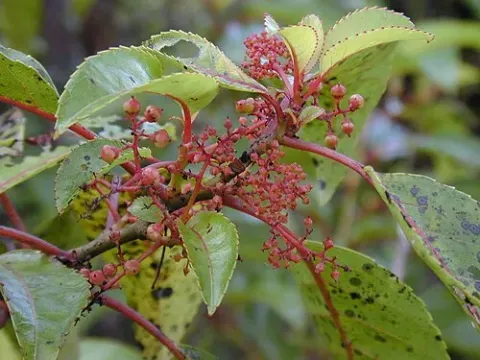
Dipentodon sinensis
Dipentodon
Dipentodon sinensis is a rare woody plant species, unique as the sole member of its family. In agricultural or botanical settings, it is propagated primarily through seeds harvested from mature trees.
What the section contains

Dipentodon sinensis
Seeds should be collected in late autumn once the capsules are fully developed but before they spontaneously open to release the seeds.
Prior to sowing, seeds often require a period of cold stratification to break dormancy. Sowing into a well-draining, nutrient-rich sterile medium is highly recommended for best results.
Cuttings represent an alternative propagation method, providing a faster way to obtain young plants while ensuring genetic consistency with the parent shrub.
Young plants require protected conditions and careful humidity control until they establish a sturdy root system, usually within the first year of growth.
Originating from the mountain regions of East Asia, Dipentodon sinensis thrives in environments with high humidity and mild, subtropical temperatures.
The ideal soil profile consists of loam or well-draining sandy soil with a neutral to slightly acidic pH, mirroring its natural forest floor habitat.
While seedlings prefer shade to avoid scorching, mature plants benefit from partial sunlight, which enhances their ability to produce flowers and seeds.
The plant is sensitive to harsh frost; therefore, cultivation in colder climates must be managed in greenhouses or sheltered environments to prevent damage.
Regular irrigation is essential during dry seasons, as the plant cannot tolerate long periods of drought, which can lead to rapid wilting.
As a non-commercial crop, Dipentodon sinensis is not grown for mass agricultural yields but is valued for botanical research and landscape ornament.
Flowering and subsequent seed production typically begin when the shrub reaches 5 to 7 years of age, depending on the growing site quality.
Yield, in the context of this species, refers to the successful production of viable seeds for conservation and propagation purposes.
The woody growth provides a stable, long-term asset in botanical gardens, with the aesthetic quality serving as the primary output of its cultivation.
Minimal amounts of biomass are harvested, as the plant is preserved for its rarity rather than its consumable properties.
The primary threats to Dipentodon sinensis are root pathogens caused by waterlogged soil and poor drainage in the potting or planting mix.
Common pests like scale insects or spider mites may attack the foliage, especially in confined or poorly ventilated indoor environments.
Integrated pest management strategies, including biological controls and regular inspections, are recommended to maintain plant vigor.
Powdery mildew can become a major concern if the plant is subjected to high humidity without sufficient air circulation between the branches.
Routine maintenance, such as pruning damaged branches, helps to reduce the risk of secondary infections and ensures the long-term health of the shrub.
Harvesting for seeds occurs in the autumn by carefully picking the fruit capsules by hand before they reach the stage of dehiscence.
After collection, the capsules must be dried in a cool, dark place with low humidity to allow for natural extraction of the internal seeds.
Cleaning involves removing the husk material, which ensures that the seeds are free from contaminants that could promote fungal growth during storage.
Storage should be done in paper envelopes kept in a cool environment, maintaining the viability of the seeds for the upcoming planting season.
Proper harvest and post-harvest management are critical steps for successful reproduction and the preservation of this unique species.