
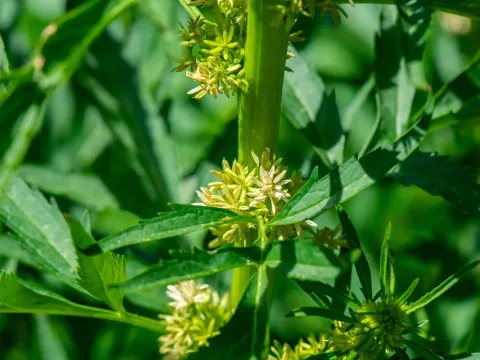
Datisca
Datisca
Sowing of Datisca (most commonly Datisca cannabina) is typically carried out in spring once soil temperatures reach 10–12°C. Due to the extremely small size of the seeds, they are usually sown superficially, lightly covered with a thin layer of light substrate or sand.
What the section contains


Datisca
In industrial farming, seeds are often stratified for 30–45 days to enhance germination rates. As a perennial plant, it is essential to maintain a spacing of 60–80 cm between rows to support the vigorous root system development in subsequent years.
To ensure successful establishment, maintain moderate soil moisture during the first few weeks after germination. Seedlings grow slowly, so keeping the area weed-free is crucial to prevent competition for nutrients.
In temperate climates, using a seedling-based approach allows for stronger plants to be established before the onset of summer drought or winter cold. Transplanting is performed at the 3–4 true leaf stage.
The plant belongs to the Datiscaceae family. It is a dioecious plant, so for seed production, growers must ensure that both male and female specimens are present on the plantation to facilitate cross-pollination.
Datisca prefers open, sunny sites, although it can tolerate light shade. In shaded conditions, both the plant's decorative appeal and the concentration of secondary metabolites in its leaves and roots are significantly reduced.
The crop is not demanding regarding soil texture, but it performs best in fertile, well-drained loamy soils. Waterlogging and stagnant water must be avoided, as they quickly lead to root rot.
The crop is well-adapted to varied climatic conditions and can withstand moderate winter frost. The optimal temperature range for active vegetation is between 18 and 25°C.
Agronomic practices include regular loosening of inter-row spaces to ensure proper soil aeration. On nutrient-poor soils, applying phosphorus and potassium fertilizers during the first half of the growing season is recommended.
Maintaining a neutral or slightly alkaline soil pH is key to success. On highly acidic soils, the plant shows stunted growth and leaf chlorosis.
Datisca possesses inherent resistance to many agricultural pests due to its specific chemical profile. However, young plants are susceptible to slugs and snails, which can cause significant damage.
Under waterlogged conditions, the plantation may be affected by root rot caused by soil-borne fungal pathogens. Preventive measures include strictly managing irrigation and avoiding high-density sowing.
Aphids may occasionally colonize the tips of young shoots during hot, dry periods. If detected, biological insecticides or simple soap solutions can be used for control.
Powdery mildew may appear in late summer during periods of high humidity and temperature fluctuations. Removing affected leaves is necessary to stop the spread of fungal spores.
Crop rotation is a fundamental protective measure. It is not recommended to plant Datisca on sites previously used for crops susceptible to similar root diseases.
Harvesting for the production of dyes (roots and aerial parts) is conducted in the 2nd or 3rd year of growth. The highest concentration of the dye datiscetin accumulates in the roots of mature plants.
Roots are harvested in the autumn after the growing season concludes, as nutrients are maximally concentrated in the underground organs. For industrial processing, roots must be washed thoroughly to remove soil.
Aerial parts, such as leaves and stems, are harvested during the peak flowering period, as this stage provides the maximum yield of secondary metabolites.
Drying of the raw material should occur in well-ventilated areas or specialized dryers at temperatures not exceeding 45°C. Exposure to direct sunlight must be avoided to prevent the degradation of pigments.
Once dried, the raw material is processed and stored in dark, dry environments. Properly prepared Datisca can retain its technological properties for several years.