
Datisca glomerata
Datisca glomerata
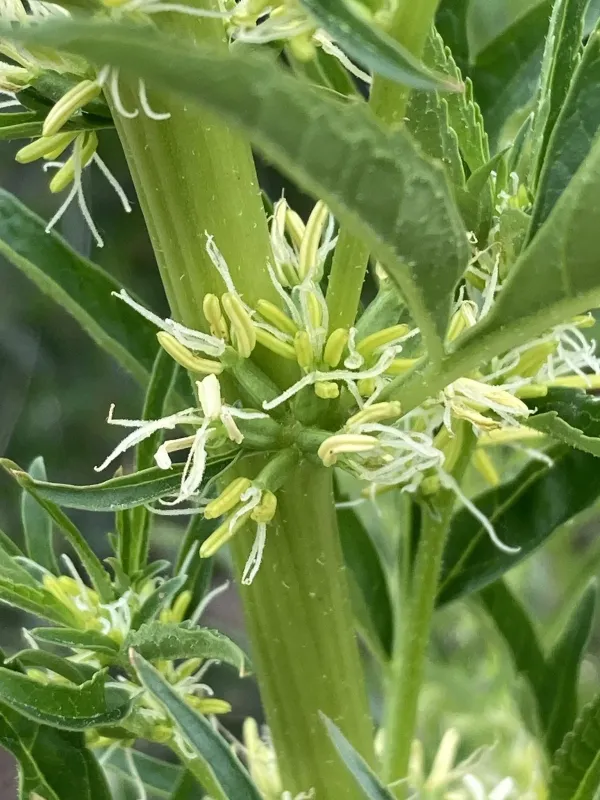
Description
Growing requirements
Datisca glomerata, commonly known as Durango root or Durangito, is a robust perennial plant belonging to the Datiscaceae family. It is native to the western regions of North America, particularly flourishing in riparian zones and moist canyons.
The plant is distinguished by its deep, woody taproot and tall, leafy stems that reach heights between 1 and 2.5 meters. The foliage is pinnately compound, creating a lush, fern-like appearance that contributes to its significant biomass production.
To cultivate this species effectively, growers must provide a habitat that mimics its natural environment, characterized by consistently moist soil and adequate drainage. It thrives in locations with partial sun exposure to full sunlight.
Soil quality is paramount; Datisca glomerata performs best in deep, well-aerated soils rich in organic matter. While it is tolerant of various soil textures, extreme alkalinity should be avoided to ensure optimal nutrient uptake.
Agricultural management requires careful attention to irrigation, especially during the establishment phase. As a nitrogen-fixing plant, it can enhance soil fertility over time, making it a valuable component in permaculture or diversified crop systems.
Harvesting
The historical and economic importance of Datisca glomerata is rooted in its role as a potent natural yellow dye. Historically, indigenous peoples utilized the roots and leaves to color materials, and today it remains a subject of botanical interest.
Harvesting is typically performed once the plant has reached maturity, usually after two to three years of steady growth. This duration ensures the roots have accumulated a sufficient concentration of the yellow pigment, datiscoside.
The harvesting process involves carefully digging out the thick rhizomatous roots. Mechanical harvesters may be used in commercial settings, provided the cutting depth is calibrated to avoid total root destruction if the crop is intended for perennial regrowth.
Post-harvest handling is critical for maintaining quality. The roots must be cleaned of debris immediately and dehydrated in low-temperature, shaded environments to preserve the chemical integrity of the flavones present in the tissue.
Storage of the processed dye material should occur in moisture-proof containers to prevent degradation. As global interest in sustainable and non-toxic dyes increases, the cultivation of this species offers a viable niche for agricultural diversification.