
Datisca cannabina
Datisca cannabina
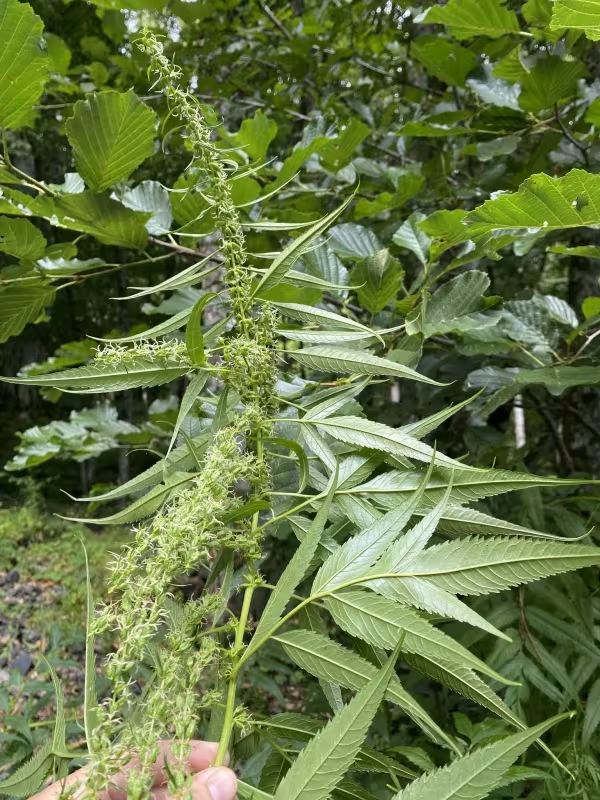
Description
Sowing dates
The sowing of Datisca cannabina should be performed in early spring once the soil temperature is sufficient to support germination. Since the seeds are small, shallow planting at a depth of 1 to 2 centimeters is crucial for success.
To improve germination rates, it is recommended to stratify the seeds or soak them in growth-promoting solutions before sowing. Consistent soil moisture is necessary to ensure uniform seedling emergence across the field.
A wide-row planting strategy, with intervals of 60 to 70 centimeters, is preferred. This provides the plants with enough space to develop their extensive root systems, which is essential for a perennial crop.
During the first year, seedlings grow slowly as they establish their root architecture. Therefore, keeping the field free of weeds during this initial phase is the most critical management task for the grower.
Once established, the plants grow vigorously in subsequent years, reaching heights of up to two meters and effectively outcompeting any surrounding weed species.
Growing requirements
Datisca cannabina belongs to the Datiscaceae family and naturally thrives in temperate, moist environments. It requires significant soil moisture throughout the growing season to reach its full potential.
The ideal soil types are fertile, well-draining loams or sandy soils. Although the plant is moisture-loving, it does not tolerate waterlogging, which can easily damage the woody rhizome system.
High light exposure is necessary to maximize the production of phytochemicals within the plant tissues. The cultivation site should be an open field with full access to direct sunlight.
The plant is highly hardy and can survive harsh winter conditions. During the dormant season, all nutrients are stored in the underground rhizome, ensuring strong regrowth in the early spring.
For commercial cultivation, organic fertilization is recommended to maintain soil structure and provide essential nutrients for sustained annual biomass production.
Yield
The yield of Datisca cannabina is measured by the total biomass of leaves, stems, and rhizomes. The plant is highly valued for its industrial application as a natural dye and pharmaceutical raw material.
Productive plantations can yield up to 20 tons of raw biomass per hectare when properly managed. Yield quality is heavily dependent on the plant's growth phase at the time of harvest.
Rhizomes are harvested every few years, providing a concentrated source of secondary metabolites. This contributes significantly to the overall economic value of the farm.
Harvesting at the peak of the flowering stage ensures the highest concentration of pigments and medicinal compounds. This is why timing the harvest is the most important factor in quality control.
As interest in natural dyes and botanical medicines grows, the demand for high-quality Datisca raw materials creates a profitable opportunity for specialized agricultural businesses.
Main diseases and pests
Datisca cannabina is naturally resistant to many common pests, which is a significant advantage for organic farming. Its complex chemical composition acts as a natural deterrent against most insects.
Fungal infections can occur if the soil remains excessively wet or if ventilation within the canopy is poor. Managing plant density is essential to minimize the risk of such diseases.
Weed control is primarily a concern during the establishment year. Mechanical inter-row cultivation is the most effective and eco-friendly method to protect young, vulnerable plants from competition.
Preventative measures include choosing well-draining fields and ensuring proper crop rotation to break any potential cycles of soil-borne pathogens.
The overall robust nature of the plant means that serious agricultural threats are rare if basic good farming practices are strictly followed throughout the rotation cycle.
Harvesting
The harvesting of the above-ground biomass is carried out by mowing the stems during the peak flowering period. Immediate drying is necessary to stop enzymatic degradation and preserve the quality of the pigments.
Rhizome harvest is scheduled for the late autumn when the plant enters dormancy. Mechanical diggers are used to extract the roots, which are then cleaned thoroughly to remove any soil residue.
The drying process should be conducted in shaded, well-ventilated structures to prevent UV light from damaging the active compounds found in the plant leaves and stems.
Once dried, the raw material can be processed or stored in climate-controlled warehouses. Proper moisture control during storage is vital to prevent spoilage and maintain value.
Efficient logistics and post-harvest handling allow farmers to meet the requirements of textile or pharmaceutical industries, ensuring a stable and profitable return on investment.