
Calectasia
Calectasia
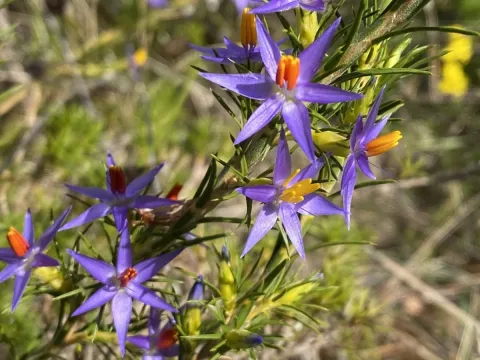
Calectasia, commonly known as the Tinsel Lily, belongs to the Dasypogonaceae family. This genus is endemic to the southern regions of Western Australia and parts of South Australia.
What the section contains


Calectasia
The plant is characterized by its rhizomatous habit, producing stiff, upright stems with needle-like leaves and papery, metallic-sheened flowers that appear in shades of blue or violet.
For successful cultivation, Calectasia requires a Mediterranean climate with well-defined seasonal patterns, ensuring dry conditions during the plant's dormant cycle.
Soil requirements are strict: the substrate must be highly porous, consisting mainly of sand or gravel mixtures, and must be completely free of stagnant water to prevent root rot.
It thrives in full sun exposure and generally requires very little irrigation, making it a suitable candidate for xeriscaping in arid or semi-arid climatic zones.
The primary threat to the health of Calectasia is Phytophthora cinnamomi, a soil-borne pathogen that causes rapid root collapse in poorly drained environments.
Foliar pests, such as aphids and mealybugs, can infest the tightly clustered stems, especially when the plant is kept in high-humidity indoor conditions.
Inappropriate use of phosphorous-based fertilizers is lethal for the plant, as it has evolved in phosphorous-poor soils and lacks the mechanism to regulate nutrient uptake.
Mechanical damage during weeding can expose the root system to fungal infections, which is why minimal soil disturbance is highly recommended.
Poor ventilation in greenhouse settings often leads to the development of fungal spores on the delicate flower petals, significantly reducing their aesthetic value.