
Calectasia cyanea
Calectasia cyanea
Description
Growing requirements
Calectasia cyanea, commonly known as the blue tinsel lily, is a perennial shrub belonging to the Dasypogonaceae family. It is endemic to the southwestern regions of Australia, where it thrives in sandy soils and open heathland environments.
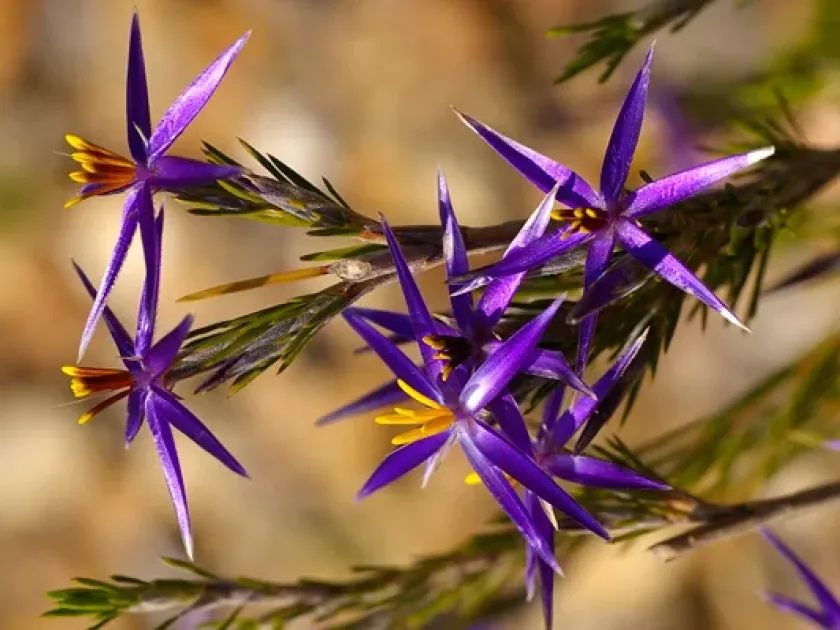
The plant is characterized by its stiff, needle-like foliage and vibrant blue or purple star-shaped flowers. The petals possess a distinct metallic or papery texture, which allows the inflorescences to retain their visual appeal for an extended period, even after the plant has been harvested.
Regarding soil requirements, this species demands excellent drainage. In a controlled environment, it is best grown in a gritty, nutrient-poor substrate that mimics its natural sandy habitat. Overwatering is the most significant error in cultivation and must be strictly avoided to prevent root decay.
Climate needs include high solar irradiance and a Mediterranean-type temperature regime. The plant is not frost-tolerant and requires greenhouse protection in cooler climates, as it is naturally adapted to mild, wet winters and warm, dry summers found in its native habitat.
Host plant usage is primarily limited to botanical collections and specialty ornamental nurseries. Due to its unique appearance, there is growing interest in propagation techniques, though it remains a niche plant rather than a widespread agricultural commodity.
Main diseases and pests
The primary threats to Calectasia cyanea are root and crown rot caused by pathogenic fungi such as Phytophthora, which thrive in poorly drained soils. Maintaining proper hygiene and optimal aeration is critical for long-term plant health.
Insect pests, including spider mites and aphids, may occasionally infest the plants in indoor or greenhouse settings. Effective management involves monitoring humidity levels and applying targeted biological or chemical control methods when necessary to preserve foliage integrity.