
Calectasia grandiflora
Calectasia grandiflora
Description
Growing requirements
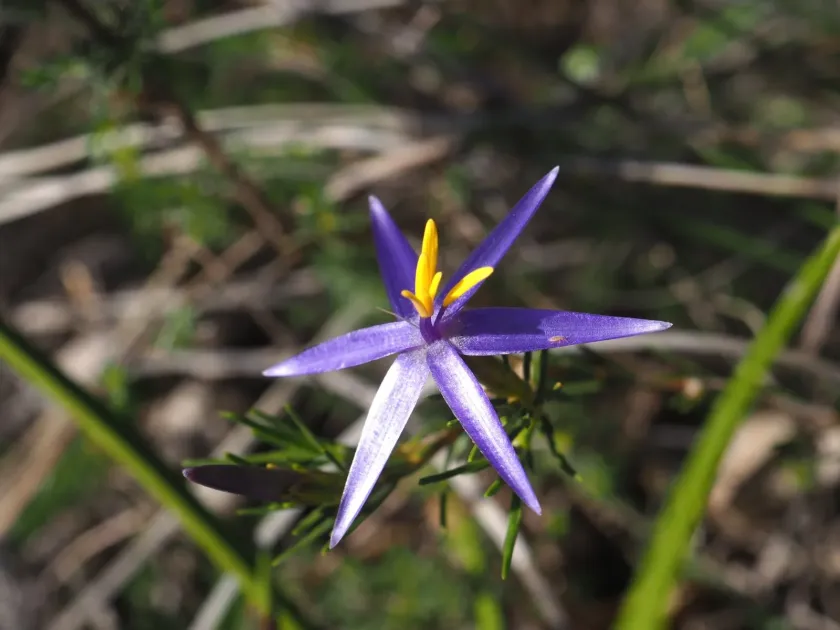
Calectasia grandiflora, commonly known as the blue tinsel lily, is a perennial flowering plant belonging to the Dasypogonaceae family. Native to the southwestern regions of Western Australia, this species is well-adapted to Mediterranean-style climates characterized by dry summers and mild, wet winters.
The plant thrives in well-drained, nutrient-poor sandy soils. Its root system is highly specialized for moisture extraction, making it essential to provide a porous substrate that prevents water stagnation, which is the primary cause of plant failure in artificial environments.
In terms of light exposure, Calectasia grandiflora requires full sun to maintain its compact, shrubby habit and to promote intense flower coloration. Inadequate light levels can lead to etiolation and a significant decrease in the production of its signature metallic-blue petals.
Botanically, the plant is distinguished by its rigid, needle-like leaves and papery flowers with bright, contrasting stamens. These features make it a prized specimen for botanical gardens and specialized collectors interested in endemic Australian flora rather than broad agricultural crops.
Agrotechnical management of this crop involves minimal fertilization, as high nutrient levels can cause rapid, weak growth. Irrigation must be carefully calibrated to mimic the rainfall patterns of its native habitat, ensuring the soil dries out sufficiently between watering events.
Main diseases and pests
The most significant threat to the health of this species is root rot caused by Phytophthora or similar fungal pathogens. In containerized cultivation, the risk of fungal proliferation increases dramatically if the potting mix does not provide sufficient drainage.
Pests such as mealybugs and spider mites may infest the plant, particularly in glasshouse environments with poor air circulation. Regular inspection of the leaf axils and stems is necessary to identify and treat potential outbreaks before they impact the plant's structural integrity.
Environmental stress, particularly sudden changes in soil pH or moisture, can weaken the plant's immunity, making it more susceptible to opportunistic pathogens. Monitoring the substrate's electrical conductivity and moisture content is a key component of effective disease management.
Chemical control measures should be applied with extreme caution, as the plant may show sensitivity to certain active ingredients found in common pesticides. Preference should always be given to integrated pest management (IPM) strategies, including the use of beneficial predatory insects.
Losses due to pests and diseases are often irreversible if detected late. Therefore, the implementation of a rigorous hygiene protocol, including the use of sterile tools and clean media, is the most effective defense strategy for protecting the collection from disease spread.