
Corallina
Corallina
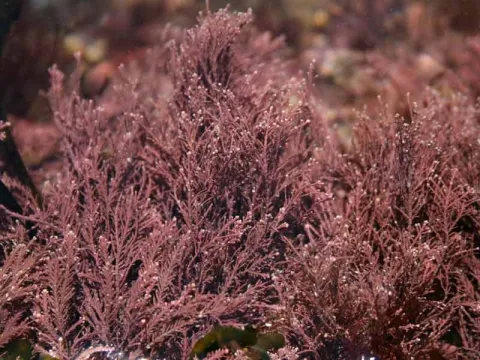
Corallina is a genus of red algae belonging to the Corallinaceae family. These organisms are unique for their calcified cell walls, which provide them with a rigid, coral-like structure. This distinctive morphology makes them highly sought after in various industrial applications.
What the section contains

Corallina
The natural habitat of this seaweed includes various marine environments, ranging from intertidal zones to deeper rocky seabeds. In cultivation, they require a stable environment with moderate water current, which is essential for nutrient uptake and CO2 availability.
Successful farming of Corallina depends on high-quality water management. In controlled environments, it is crucial to maintain optimal pH levels to support the ongoing process of calcification. Any significant drop in pH can lead to the structural degradation of the plant.
Light intensity plays a pivotal role in the photosynthetic development of the algae. Producers often use specialized lighting systems in closed-loop reactors to ensure consistent growth rates throughout the year, independent of seasonal variations.
Soil or substrate requirements are minimal since these algae attach to rocks, but in artificial settings, specific mineral-rich ceramic or polymer substrates are used to encourage holdfast attachment and overall plant health.
Yield estimation for Corallina is based on dry biomass accumulation over time. Due to its slow growth, the production cycle is longer than that of non-calcified green seaweeds, requiring careful planning and long-term farm management strategies.
The primary commercial use of Corallina is in the beauty and skincare industry. Extracts derived from these algae are valued for their high concentrations of marine minerals and polysaccharides, which are used to improve skin hydration and combat premature aging.
Harvesting techniques involve precision cutting of the mature branches, allowing the base to remain intact and regenerate. This sustainable harvesting method ensures continuous yields from the same biological population for multiple seasons.
Post-harvest processing is essential for maintaining product quality. Techniques such as freeze-drying are commonly employed to preserve the biological activity of the secondary metabolites found within the thallus of the seaweed.
Emerging research is exploring the use of Corallina extracts in nutraceuticals. Its high calcium content and bioavailability make it an interesting candidate for supplement formulations aimed at bone health and mineral enrichment.
The most significant threats to Corallina crops involve bacterial biofilm development and epiphytic fouling. Maintaining sterile or highly filtered water circulation is the primary defense strategy used by commercial aquaculture farms.
Ocean acidification poses a systemic threat to calcified organisms, as it inhibits their ability to build their characteristic skeleton. Continuous monitoring of seawater chemistry is required to mitigate these environmental challenges.
Pathogenic outbreaks in dense cultures can spread rapidly, leading to tissue necrosis. Implementing regular health screenings and maintaining proper water turnover rates are necessary to prevent the loss of entire crop cycles.
Physical stress from currents or debris can damage the fragile calcified structures of the plants. Designing protected enclosures or utilizing semi-submersible cultivation platforms is standard practice to safeguard the seaweed.
Contamination with heavy metals or pollutants is a significant safety concern for algae destined for cosmetic or food use. Therefore, selecting site locations with low human activity is a prerequisite for any professional Corallina production facility.