
Moonflower
Calonyction
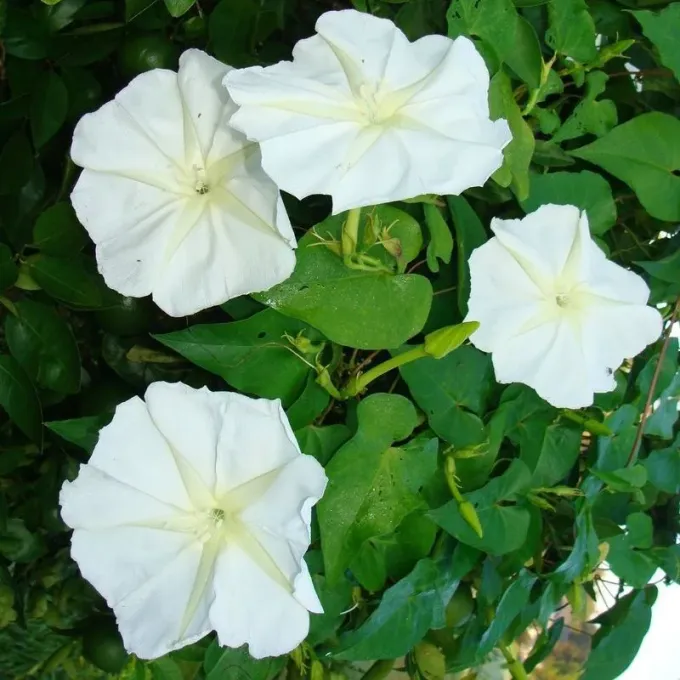
Description
Sowing dates
Moonflower (Calonyction aculeata), a member of the Convolvulaceae family, is a vigorous vine. In cooler climates, seeds should be started indoors in March or early April to extend the growing season.
Seed coats are very hard, so professional growers recommend nicking the seed (scarification) or soaking it in warm water for 24 hours before planting. This practice significantly improves the germination rate of the seeds.
Transplanting into the permanent site must occur only after the danger of frost has completely passed. The plant is highly sensitive to cold temperatures and prefers soil temperatures of at least 20 degrees Celsius.
When sowing directly outdoors in warmer regions, spacing should be approximately 50–70 centimeters apart. This allows the plant enough space to spread its foliage and reach its full potential as a climber.
Since the vine can grow up to 5 meters in a single season, it is crucial to provide a sturdy trellis or fence immediately after planting. Proper support is essential for healthy vertical development.
Growing requirements
The culture thrives in rich, loose, and well-drained soil. It performs best in substrates with a neutral pH, avoiding heavy clay soils that can compact and suffocate the sensitive root system.
Consistent moisture is required for growth; however, overwatering is a major risk factor. Proper drainage is mandatory to prevent waterlogging, which often leads to root diseases and poor plant health.
Moonflower requires full sun exposure to thrive and initiate its signature evening blooming. While it can tolerate partial shade, insufficient light will result in weak, leggy stems and fewer flower buds.
Fertilization should be balanced throughout the season. Early in the growth phase, high-nitrogen fertilizers promote leaf growth, while switching to high-phosphorus formulas supports bloom production as the season progresses.
Routine maintenance includes weeding and mulch application at the base of the plant. Mulching helps retain soil moisture during peak summer heat and prevents the surface from drying out too rapidly.
Main diseases and pests
Spider mites are the most common pests affecting moonflowers, especially in dry and hot conditions. Regular inspection of the underside of leaves is recommended for early detection of mite infestations.
Aphids tend to cluster on tender new shoots and buds. If left untreated, they can stunt growth and transmit viral diseases, necessitating the use of horticultural soaps or systemic insecticides.
Powdery mildew can be a significant threat if air circulation is poor. Planting at the correct spacing and avoiding overhead irrigation in the evening can minimize the conditions favorable for fungal growth.
Root rot is typically caused by poorly drained soil or overwatering. Once established, it is difficult to control, making preventive measures like proper soil preparation and careful watering habits essential.
Whiteflies can also impact the health of the vine during the summer months. Monitoring with yellow sticky traps or using organic pesticides is effective in keeping the pest population under control.