
Agrippa's Meadow Saffron
Colchicum agrippinum
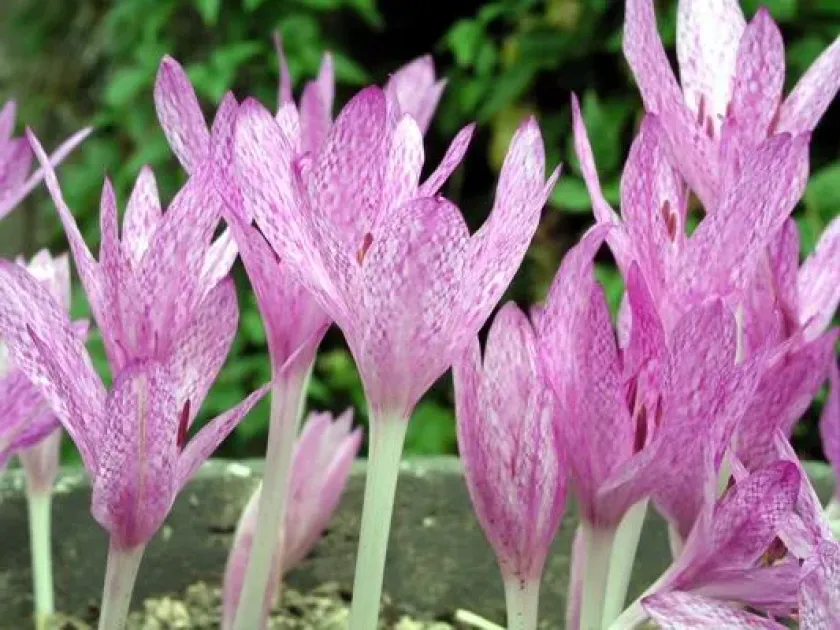
Description
Sowing dates
Planting of Agrippa's Meadow Saffron (Colchicum agrippinum), belonging to the Colchicaceae family, is typically carried out in late summer, specifically during August or September.
The bulbs require a dormant period, making late summer the ideal time to ensure they establish their root system before the onset of the autumn flowering season.
The planting depth should be approximately 10–15 centimeters, depending on the bulb size and the texture of the soil, to provide proper stability and growth.
Propagation through daughter bulbs is performed by separating them from the parent plant once the foliage has completely turned yellow, usually in June.
Correct timing is essential, as the bulbs must settle into the soil environment well before the first frosts to ensure robust development of future flower stalks.
Growing requirements
The plant prefers sunny locations or partial shade, protected from strong winds that might damage the delicate petals during its autumn flowering phase.
It thrives in loose, fertile, and well-drained loam soils; stagnant water is extremely detrimental and often leads to the rapid rotting of the bulbs.
If the soil is heavy or prone to waterlogging, it is strictly necessary to install a drainage layer to prevent moisture accumulation around the roots.
Moderate watering is required during the active growth period, while moisture should be kept to a minimum or eliminated during the summer dormant phase.
While the species is generally winter-hardy, in regions with severe winters, a light mulch layer of peat or dry leaves is recommended for additional protection.
Yield
The agricultural utility of this crop is primarily focused on its ornamental value, with yields measured by the multiplication rate of the corms.
A single healthy, established plant typically produces one to three replacement bulbs annually, allowing for a steady expansion of the planted area.
It is crucial to note that the entire plant, especially the seeds and bulbs, contains colchicine, making it highly toxic to both humans and domestic animals.
Commercial use is limited to professional pharmaceutical processing of alkaloids; therefore, manual harvesting by amateurs for medicinal use is not recommended.
The aesthetic contribution to gardens is significant, as it provides vibrant floral displays during the autumn months when many other perennials have faded.
Main diseases and pests
Slugs and snails are the most prominent pests, as they frequently graze on the lush spring foliage, which can significantly weaken the overall plant health.
In conditions of excessive soil moisture or improper drainage, the plants become highly susceptible to grey mould and other fungal rot diseases.
Rodents such as moles and voles may cause mechanical damage to the bulbs, creating entry points for secondary infections or completely destroying the corms.
Viral infections, such as those causing color breaking or mosaic patterns on leaves, are irreversible and necessitate the immediate removal of affected plants.
Preventive maintenance includes consistent monitoring, appropriate spacing to ensure air circulation, and avoiding over-irrigation during the dormant cycle.