
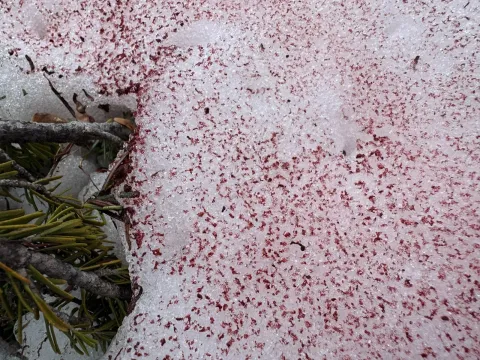
Chlamydomonas
Chlamydomonas Ehrenberg
Chlamydomonas is a genus of green algae belonging to the family Chlamydomonadaceae within the order Volvocales. This unicellular organism is found globally in freshwater environments, moist soils, and wastewater systems.
What the section contains

Chlamydomonas
Successful cultivation requires aqueous media enriched with essential mineral salts such as nitrogen, phosphorus, and potassium. The ideal temperature range for most species is between 20 and 25 degrees Celsius.
Light availability is the primary factor for photosynthesis in this species. Intense light or mixotrophic nutrition, which includes the addition of organic carbon like acetate, is essential for promoting rapid population growth.
Maintaining a neutral to slightly alkaline pH is critical for optimal physiological performance. Consistent aeration is a mandatory agricultural practice to ensure sufficient gas exchange and prevent metabolic deficiencies.
Botanical traits include two flagella and a large, cup-shaped chloroplast with a pyrenoid. This structure allows the organism to exhibit phototaxis, movement towards light, which is essential for survival in natural environments.
Productivity is measured by the total biomass harvested from the culture media. Thanks to rapid cell division cycles, high concentrations of cell counts per milliliter can be achieved in short timeframes.
The industrial applications of Chlamydomonas include the production of biofuels, natural pigments, and specialized feed additives. It is also a premier model organism in molecular biology and genetic research.
Large-scale production of recombinant proteins has positioned this alga as a key player in modern agricultural biotechnology. Advanced photo-bioreactors enable stable and high-volume yields.
The total yield is heavily dependent on the chosen cultivation method. Closed systems are generally more efficient than open pond systems due to better control over contamination and environmental variables.
Yield limits are often dictated by self-shading phenomena, where the density of cells prevents light from reaching the center of the culture, necessitating constant mechanical stirring.
Biological contamination remains the greatest threat to the culture. Predatory microorganisms like ciliates and amoebae can rapidly deplete populations, causing total loss of the biomass.
Bacterial proliferation can shift the chemical balance of the growth media, creating hostile conditions for the algae. Competition with invasive algal species also poses a significant management challenge.
Mitigation strategies involve stringent sterilization of growth media and the maintenance of aseptic conditions. In specific research settings, antibiotics are used to prevent bacterial growth.
Environmental stress, such as light overexposure or improper temperature fluctuations, can trigger photoinhibition and cellular death, impacting overall stability.
The accumulation of waste metabolites in the medium can inhibit growth once the culture reaches high density, requiring regular monitoring and periodic medium replacement.