
Desmococcus
Desmococcus
Desmococcus is a genus of green algae belonging to the family Chaetophoraceae. It is recognized primarily as an epiphytic organism, commonly colonizing tree bark, stone surfaces, and artificial structures in damp environments throughout temperate and humid regions.
What the section contains

Desmococcus
The organism does not function as a conventional agricultural crop but is significant in botanical and ecological studies as a primary colonizer of surfaces. It excels in environments where moisture is consistently available, even if sunlight levels are diffuse or suboptimal for higher plants.
Regarding environmental needs, Desmococcus requires moderate temperatures and high atmospheric humidity to maintain metabolic activity. It is remarkably resilient, capable of surviving sub-zero temperatures and prolonged dry spells by entering a dormant state until moisture levels recover.
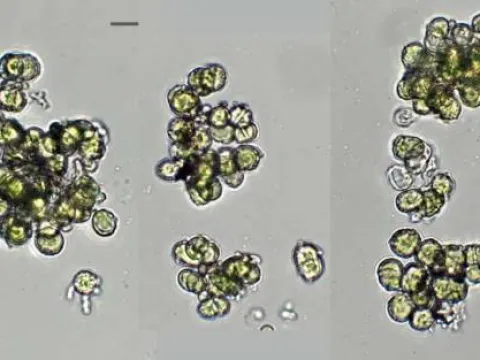
Botanically, it consists of simple cells that divide to form small colonies, creating a vibrant green patina on various substrates. Unlike vascular plants, it does not rely on root uptake of minerals, instead absorbing nutrients and moisture directly from the surface and the surrounding air.
In terms of management, the presence of dense Desmococcus patches on fruit trees can serve as a biological indicator of poor air circulation within the canopy. Orchard managers often consider its excessive growth as a sign that pruning or improved site drainage may be necessary to ensure tree health.
The main threats to Desmococcus colonies include prolonged drought conditions that cause cellular dehydration and death. Furthermore, the application of chemical pesticides or fungicides on host trees often creates an environment unsuitable for the continued growth of these algae.
Inter-species competition acts as another limiting factor. Other epiphytes, such as various species of lichens, can outcompete Desmococcus for surface space. Despite this, the rapid reproductive rate of Desmococcus allows it to persist and reclaim niches when conditions are favorable.