
Chaetophora
Chaetophora
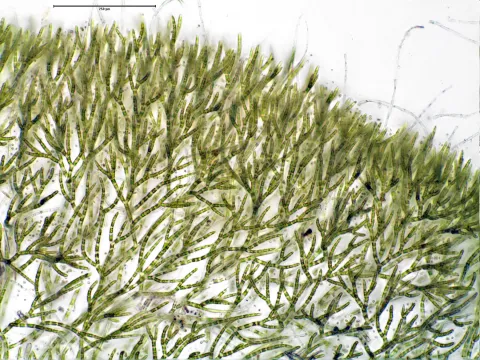
Chaetophora is a genus of green algae belonging to the family Chaetophoraceae. While not a commercial agricultural crop, it is a significant organism in the field of phycology and aquatic biology, often appearing in freshwater habitats.
What the section contains

Chaetophora
The thallus of these algae is typically formed by branched filaments embedded in a firm, gelatinous matrix. This structural adaptation allows colonies to take on various shapes, often appearing as small, globose, or hemispherical masses attached to submerged surfaces.
The environmental requirements for these algae are specific: they thrive in clean, well-oxygenated freshwater environments. They are highly sensitive to pollution and high nutrient levels, often serving as a natural indicator of good water quality in streams and ponds.
These organisms are widely distributed globally, primarily found on rocks, wood, or larger aquatic plants. Their growth cycle is heavily influenced by seasonal light availability and water temperature, which typically peaks during the warmer months of the year.
Regarding human utility, Chaetophora is not harvested for food or fiber. However, it plays an essential role in aquatic ecosystems by contributing to primary production. Understanding its life cycle is valuable for managing irrigation reservoirs and maintaining biological balance in aquaculture systems.