
Chaetophora elegans
Chaetophora elegans
Description
Growing requirements
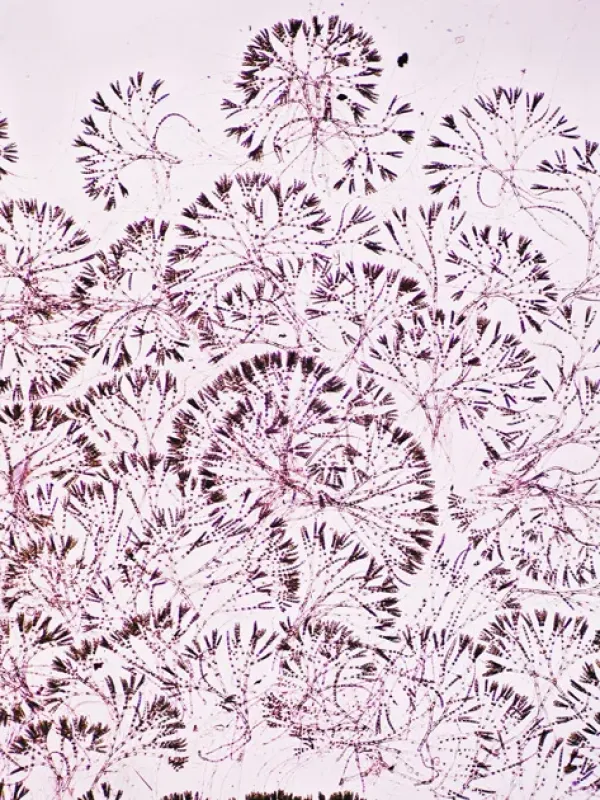
Chaetophora elegans is a species of green algae belonging to the Chaetophoraceae family. It is widely recognized by its distinct, gelatinous, and branched colony structure that forms spherical or hemispherical shapes on aquatic surfaces.
This alga thrives in clean, fresh water environments, typically attaching itself to submerged stones, aquatic plants, and wooden debris. It requires clear water and high levels of dissolved light to support its metabolic processes.
The morphology consists of a dense network of branching filaments enclosed in a thick mucilage. This protective gelatinous matrix is a critical adaptation for survival in changing water conditions and protection from herbivory.
Distribution is global, as the alga is easily dispersed by birds and water currents. In the context of managed water bodies, its presence is often noted as an indicator of stable ecological health.
Unlike conventional crops, it requires no human cultivation. However, understanding its biology is essential for managing irrigation systems and reservoirs where it may appear as part of the native periphyton community.
Main diseases and pests
Eutrophication represents the primary threat to Chaetophora elegans, as excessive nutrient load from agricultural runoff promotes the growth of opportunistic planktonic algae that outcompete it for light.
Chemical contamination, particularly the presence of herbicides or toxic industrial residues, can rapidly degrade the gelatinous colonies, leading to population decline.
Siltation is another major issue. As sediments settle on the surface of the colonies, they block sunlight, effectively starving the organism of the energy needed for photosynthesis.
Alterations to the hydrological regime, including frequent dredging or drying of water channels, destroy the substrate required for the stable attachment of the filamentous thallus.
Predation by macroinvertebrates and certain species of snails can significantly reduce colony density during peak summer months, especially in small, stagnant water bodies.