
Rutabaga
Brassica napus L. var. napobrassica (L.) Rchb.
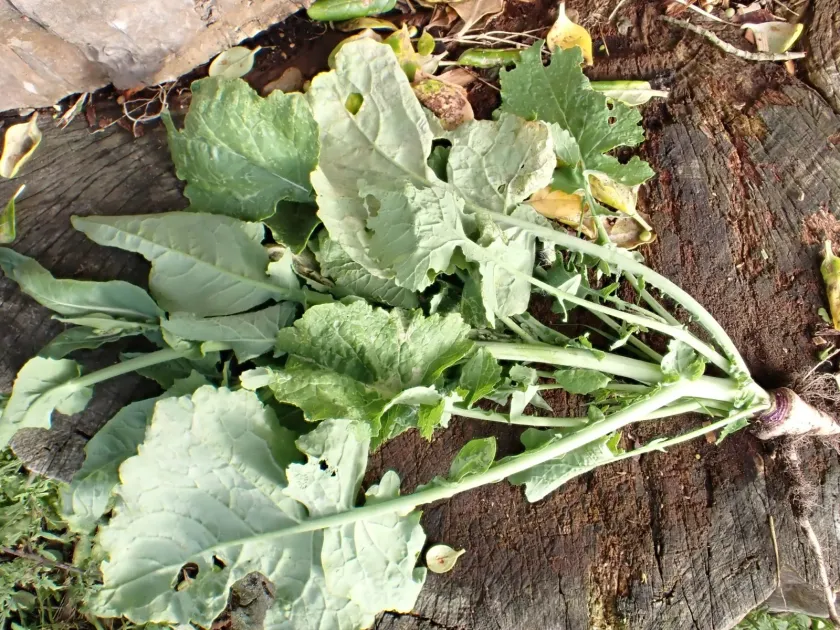
Description
Sowing dates
Rutabaga is a cold-hardy, long-day crop, so planting times are critical for high-quality root development. In temperate climates, seeds are sown in late spring once the soil temperature consistently reaches 5–8 degrees Celsius.
For a winter harvest, sowing should take place in mid-June. This timing ensures that the main growing period avoids the long daylight hours of early summer, which can otherwise trigger premature flowering and bolting of the plants.
Seeds should be planted at a depth of about 2 centimeters in rows spaced 45 to 60 centimeters apart. Proper spacing is essential to ensure adequate airflow and sunlight penetration, which reduces the risk of fungal diseases.
Thinning is a mandatory maintenance practice performed in two stages. The first thinning occurs at the two-leaf stage, leaving plants 5–7 centimeters apart to encourage initial development.
The second thinning follows three weeks later, increasing the spacing to 15–20 centimeters. This provides enough room for the roots to expand into large, uniform shapes without competition from neighboring plants.
Growing requirements
As a member of the Brassicaceae family, rutabaga is a cross between a turnip and a cabbage. It thrives in cool climates with consistent soil moisture and moderate ambient temperatures throughout the growing season.
The best soils for rutabaga are fertile, well-draining loams or sandy loams with a neutral pH level. If the soil is too acidic, liming should be performed well in advance to optimize nutrient uptake and root health.
Water requirements are high, especially during the root expansion phase. Insufficient moisture during the summer can lead to woody, bitter, and fibrous root tissue, significantly reducing both culinary and market value.
Organic matter, such as well-rotted compost, should be incorporated into the soil during fall preparation. While nutrients are important, avoid high nitrogen levels in the late season to prevent excessive foliage growth at the expense of root storage capacity.
Optimal growth temperatures range from 15 to 18 degrees Celsius. Temperatures exceeding 25 degrees Celsius can slow down the development process and increase the likelihood of pest infestations and physiological disorders.
Yield
With proper management, rutabaga yields can range from 30 to 60 tons per hectare depending on the variety and local growing conditions. Modern cultivars can produce clean, heavy roots weighing between 0.5 and 1.5 kilograms.
Regular inter-row cultivation is essential to control weeds and improve soil aeration. Since rutabaga develops slowly during its early growth stage, keeping the fields weed-free is crucial for achieving the full genetic potential of the crop.
Rutabaga is highly valued for both human consumption and livestock feed due to its high sugar content and vitamin profile. Its excellent storage characteristics make it a reliable food source throughout the winter months.
Stored properly, high-quality roots can remain fresh for up to 6–8 months in cool, humid storage environments. Proper temperature control, ideally between 0 and 2 degrees Celsius, is the key to maintaining crispness.
Balanced application of potassium-based fertilizers during the mid-season improves flesh density and sweetness. This not only enhances the quality of the harvested product but also helps the roots withstand the stresses of long-term storage.
Main diseases and pests
The primary pest affecting rutabaga is the flea beetle, which poses a severe threat to seedlings shortly after germination. Early monitoring and protection are vital to prevent total crop loss in the initial weeks.
Other major threats include the cabbage root fly and cabbage white butterfly larvae, which can cause significant damage to the leaves and tunnel into the roots, leading to decay. Crop rotation is the most effective cultural practice for managing these pests.
Clubroot is the most devastating disease for rutabaga, causing gall-like swellings on the roots that restrict nutrient flow. Once clubroot is established in a field, it remains in the soil for several years, requiring strict management practices.
In high-humidity conditions, fungal infections such as powdery mildew or gray mold can develop. These diseases are particularly prevalent in poorly ventilated storage facilities or overcrowded garden patches.
- Rotate crops every 4–5 years to break pest life cycles.
- Use certified seeds to minimize the risk of soil-borne pathogens.
- Remove any cruciferous weeds from the field perimeter.
- Ensure dry, well-ventilated conditions for stored roots.
Harvesting
Harvesting should be completed before deep winter frosts set in. While rutabaga is frost-hardy, allowing the roots to freeze in the ground can cause tissue damage and compromise their ability to be stored effectively.
The roots should be lifted from the soil with care to prevent skin nicks or deep cuts. Even minor physical damage can lead to rapid decay, as microbes can easily enter the root and destroy its integrity during storage.
Once lifted, the tops should be trimmed to within 1–2 centimeters of the crown. It is critical to leave the crown intact to prevent rot while ensuring the plant does not continue to draw energy from the root.
After trimming, allow the roots to air-dry in a shaded, well-ventilated area for a few days. This process helps seal the skin and reduces moisture loss, preparing the crop for storage or market preparation.
Sorting is the final step before storage. By separating smaller or slightly damaged roots for immediate use, growers can ensure that only the healthiest, most robust specimens occupy the storage bins for long-term supply.