
Fodder turnip
Brassica napus var. napus
Description
Sowing dates
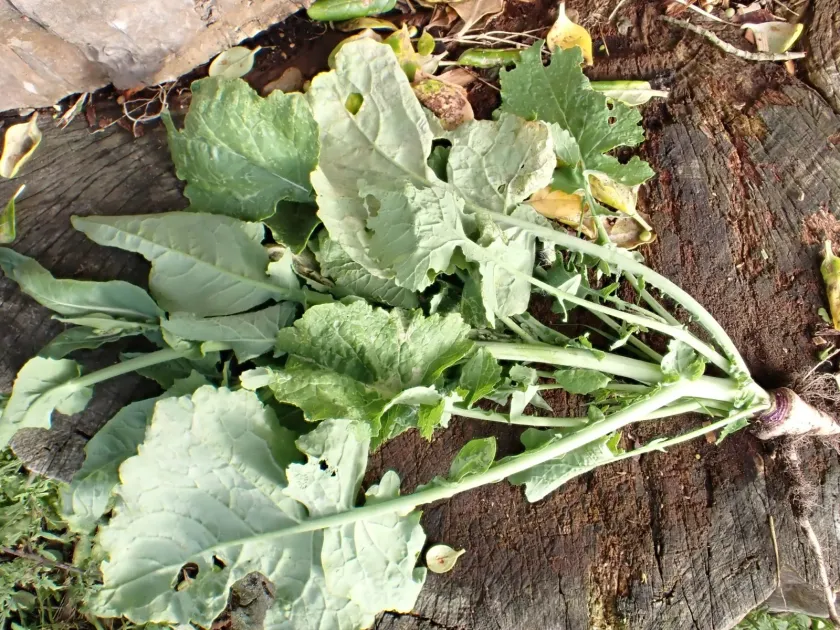
Fodder turnip is a biennial plant belonging to the Brassicaceae family, primarily cultivated for its large, nutritious root system and lush foliage used for livestock feed.
Seeds are typically sown in early spring, once soil temperatures reach 5-8 degrees Celsius, to allow for optimal germination and early establishment.
The standard planting method involves using row drills with a spacing of 45-60 cm between rows, placing seeds at a depth of 2-3 cm for best results.
In regions with longer growing seasons, summer sowing is also feasible, providing a valuable second crop option following the harvest of winter cereals.
Thinning is a crucial post-emergence step, as it ensures that plants are spaced 15-20 cm apart to facilitate the development of large, heavy root crops.
Growing requirements
Fodder turnip requires consistent soil moisture for optimal growth, particularly during the root expansion phase, but it cannot withstand waterlogged conditions.
The crop thrives in fertile, well-drained loamy or sandy loam soils that possess a neutral to slightly acidic pH, promoting robust root development.
As a cold-hardy plant, it is well-suited for temperate climates, showing good resilience against light frosts throughout the autumn season.
Sufficient sunlight is essential for photosynthesis; therefore, maintaining proper crop density is vital to prevent etiolation and ensure high foliage quality.
Balanced fertilization, particularly with potassium and phosphorus, plays a key role in increasing sugar content and enhancing the storage life of the harvest.
Yield
With proper agronomic practices, fodder turnip can produce yields ranging from 40 to 80 tonnes per hectare, making it a highly efficient forage crop.
Beyond the primary root crop, the edible leafy greens provide additional biomass that can be grazed or harvested for supplemental animal feed.
Varietal selection, soil fertility, and effective weed control significantly influence the final tonnage produced across different agricultural conditions.
Nitrogen applications during the rosette stage are particularly effective in boosting total vegetative mass and improving overall yield performance.
Consistency in field management ensures that yields remain stable even under variable climatic conditions, confirming the crop's reliability for farmers.
Main diseases and pests
Crucifer flea beetles are the most significant threat to young seedlings, often causing severe damage early in the growing season before plants are established.
Other major pests include cabbage root fly and aphids, which can significantly reduce the vitality of the foliage and quality of the roots during development.
Common diseases such as clubroot, blackleg, and powdery mildew can affect the crop, particularly when rotation cycles are too short or moisture levels are too high.
Integrated pest management strategies, such as crop rotation and the use of resistant varieties, are essential to maintain field health and reduce chemical inputs.
- Use of high-quality seed treatments
- Consistent monitoring for insect outbreaks
- Maintenance of proper crop rotation cycles
- Weed management to prevent pest reservoirs
Harvesting
Harvesting should be completed before the arrival of deep frost, as frozen roots are prone to rapid decay and exhibit poor keeping qualities during storage.
The harvesting process generally involves mechanical lifting followed by foliage removal to prepare the roots for transport or immediate storage in cool facilities.
Post-harvest curing is recommended, as it allows the root skin to toughen and minor wounds to heal, which significantly decreases the risk of storage rot.
Optimal storage conditions involve maintaining temperatures between 0 and 2 degrees Celsius with adequate ventilation to prevent moisture buildup.
Properly managed fodder turnip harvests provide a consistent source of winter feed, ensuring animal health and productivity during the colder months of the year.