
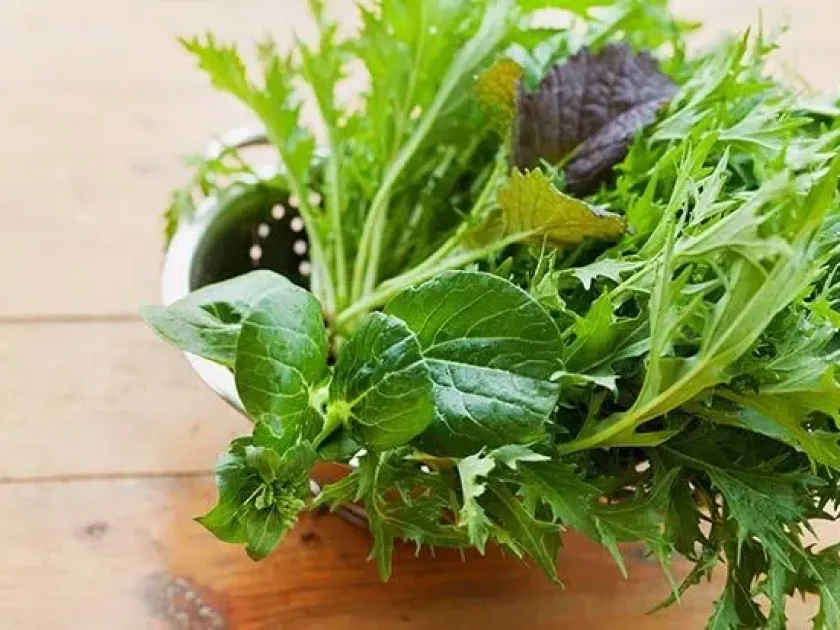
Pak choi and mizuna hybrid
hybrids between Brassica rapa L. Emend. Metzg. ssp. chinensis (L.) Hanelt and Brassica rapa L. subsp. nipposinica (L. H. Bailey) Hanelt
Description
Sowing dates
The hybrid of pak choi and mizuna is a fast-growing leafy green belonging to the Brassicaceae family. It is highly valued by gardeners for its ability to produce a harvest in a very short time frame, often serving as an excellent catch crop.
Sowing in open ground typically begins in early spring, as soon as the soil has warmed up to 8-10 degrees Celsius. For continuous production, successional sowing every two to three weeks is recommended throughout the growing season.
Late summer and autumn sowings are also successful, as this hybrid thrives in cooler temperatures and is less prone to bolting during shorter days. It is an ideal plant for cool-season gardening.
The seeds should be sown at a depth of 1-1.5 centimeters. Maintaining a row spacing of approximately 25-30 centimeters ensures sufficient room for development and allows for easier weeding and maintenance.
Transplanting seedlings started in containers can further accelerate the harvest. Raising seedlings for 3-4 weeks before planting out into the field provides a significant head start over direct sowing.
Growing requirements
The hybrid prefers fertile, well-drained soils with good moisture retention. Sandy loams enriched with organic compost provide the ideal environment for the rapid development of tender, flavorful leaves.
While the plant enjoys sunlight, protection from harsh mid-summer heat is crucial to prevent premature bolting and bitter flavor development. Partial shade during the hottest part of the day can improve leaf quality.
Consistent irrigation is vital, as the plant has a shallow root system. Uneven watering often leads to stress, which manifests as stunted growth and poor texture. Keeping the soil evenly moist is the main priority.
The ideal temperature range for growth is between 15 and 22 degrees Celsius. Extreme heat is the primary enemy of this crop, causing the plants to enter a reproductive phase and produce flowers instead of quality leaves.
Nitrogen-rich fertilizers can boost growth, but they should be used moderately. Over-fertilization, especially with chemical nitrogen, can lead to nitrate accumulation and a less desirable taste in the final product.
Yield
Yield potential is highly impressive due to the rapid growth cycle. Under optimal conditions, growers can expect 3 to 4 kilograms of fresh greens per square meter in a single cycle.
The final weight depends significantly on the harvesting method. Harvesting whole heads results in higher weight per plant compared to picking individual leaves throughout the season, but both methods have their benefits.
High yields are contingent upon proper weed management and soil fertility. Weeds compete aggressively for resources, so keeping the beds clear is essential for maximizing the productivity of the hybrid.
Indoor or greenhouse cultivation can push yields even higher by protecting the crop from sudden weather fluctuations. In controlled environments, this hybrid can be harvested multiple times throughout the year.
Success in achieving high yields also relies on choosing the right spacing. Crowding plants to increase density can lead to disease issues, so maintaining the correct balance is key to overall success.
Main diseases and pests
Crucifer flea beetles are the most significant pest, as they can quickly decimate young seedlings. Covering rows with floating row covers is the most effective organic method for prevention.
Slugs and snails can cause substantial damage to the leaves, especially in damp conditions. Using physical barriers or bait traps is standard practice for controlling these pests in organic garden settings.
Clubroot is a serious soil-borne disease that can stunt and deform the root system. Proper crop rotation is the only way to avoid this issue, as the pathogen can persist in the soil for several years.
Powdery mildew may occur during periods of high humidity and poor air circulation. Ensuring proper spacing and keeping the foliage dry when watering are fundamental steps to minimize the risk of infection.
Bacterial soft rot can affect plants that have been damaged by heavy rain or mechanical injury. Handling plants carefully and removing any debris helps maintain a healthy growing environment.
Harvesting
Harvesting usually begins 30 to 45 days after sowing, depending on the variety and environmental conditions. The plant is very versatile and can be harvested at several stages of maturity.
The best time to harvest is in the early morning when the leaves are crisp and fully hydrated. This ensures that the produce maintains its quality and shelf life after being cut.
For whole-head harvesting, the plant is cut just above the soil line with a sharp knife. If harvesting individual leaves, the outer, more mature leaves are removed, allowing the center of the rosette to continue growing.
Post-harvest care involves immediate cooling and cleaning of the product. Storing the leaves in a perforated bag in a refrigerator will keep them fresh for several days, maintaining their crunch.
Avoid harvesting when the plants start to bolt, as the leaves become tough and develop a bitter, unpleasant taste. Always inspect the plants for signs of flower buds before initiating a major harvest.