
Collard greens
Brassica oleracea L. (Collard Group)
Description
Sowing dates
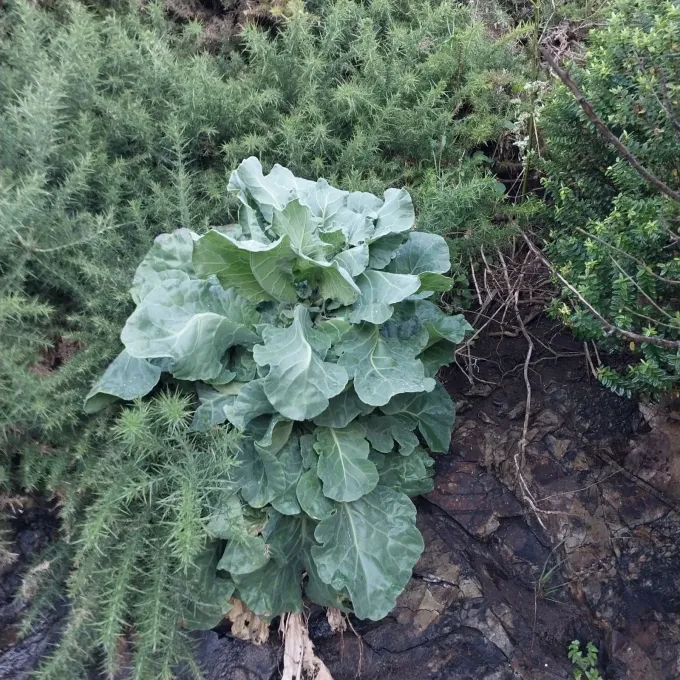
Collard greens (Brassica oleracea L. Collard Group) are a hardy leafy vegetable belonging to the Brassicaceae family. Unlike many other brassicas, they do not form a compact head and are grown for their nutrient-dense leaves.
The seeds can be sown indoors in trays during early spring, typically 4 to 6 weeks before the last frost date, to prepare healthy transplants for the garden.
For direct seeding in the garden, sow seeds 0.5 to 1 cm deep in rows spaced 45 to 60 cm apart. This ensures sufficient space for the plants to reach their full potential size.
Succession planting is a recommended strategy to maintain a continuous supply of fresh greens. Planting every few weeks allows for staggered harvests throughout the growing season.
Collards are highly versatile and can be planted in both early spring and late summer to harvest in the cool temperatures of autumn, which actually enhances their flavor.
Growing requirements
Collard greens thrive in full sun but can tolerate partial shade, especially in warmer climates where protection from the afternoon heat is beneficial for the quality of the leaves.
The ideal soil for this crop is fertile, well-draining, and rich in organic matter. A soil pH between 6.0 and 7.0 is considered optimal for nutrient availability.
Consistent soil moisture is vital for rapid growth. Plants should be watered regularly, ensuring the soil stays evenly moist but avoiding waterlogged conditions which can induce root rot.
These plants are heavy feeders and benefit from an application of nitrogen-rich organic fertilizers during the active growth period to promote lush, green foliage.
Temperature tolerance is one of the key characteristics of collard greens. They are extremely hardy and can withstand freezing temperatures, which often makes the leaves sweeter and more tender.
Main diseases and pests
Flea beetles are a primary threat during the early stages of growth, often causing small, shot-like holes in the leaves of young seedlings.
Caterpillars of cabbage white butterflies and cabbage loopers are common pests that feed extensively on the foliage, requiring diligent monitoring and prompt control.
Clubroot is a serious soil-borne disease affecting the root system, causing stunted growth and wilting. Maintaining high soil pH through liming is a critical management strategy.
Downy mildew and bacterial leaf spots may occur in conditions of high humidity or poor air circulation, necessitating wide plant spacing and proper sanitation practices.
- Using floating row covers to physically exclude insect pests.
- Practicing a three-year crop rotation to break disease cycles.
- Removing debris from the garden to reduce overwintering sites for insects.
- Applying insecticidal soaps or biological controls when pest populations rise.
Harvesting
Harvesting usually begins when the leaves reach a usable size, typically 50 to 75 days after seeding, depending on the specific variety and growing conditions.
The preferred harvest method is to snap or cut the lower, outer leaves individually. This method allows the central stem to continue producing new leaves from the crown.
Regular harvesting encourages the plant to continue growing until the onset of hard, killing frosts. It is important to harvest before the plant begins to bolt, or flower, as the leaves can become bitter.
For best quality, harvest in the early morning when the leaves are turgid and cool. This ensures that the produce stays crisp for a longer period after picking.
Post-harvest storage requires refrigeration at temperatures close to 0 degrees Celsius with high humidity. Properly stored collard greens can remain fresh for up to two weeks.